



Best Gutter Installation Services Near You
Why the Right Gutter Installation Services Matter for Your Home
Gutter installation services are professional solutions for measuring, fabricating, and mounting a complete drainage system on your home’s roofline — directing rainwater safely away from your foundation, siding, and roof structure.
Quick answer: What do gutter installation services include?
- Assessment — measuring roofline length, pitch, and runoff volume
- Material selection — choosing aluminum, copper, steel, or vinyl based on climate and home style
- Custom fabrication — cutting or forming gutters to fit your specific roofline
- Professional mounting — securing gutters at the correct slope with hidden hangers
- Downspout placement — routing water away from your foundation
- Final inspection — testing flow, checking drainage, and confirming proper pitch
Your gutters are doing a quiet, critical job every time it rains. When they fail — or were never installed correctly in the first place — the damage shows up slowly: stained siding, rotting fascia, eroding soil, and eventually, moisture in your basement or cracks in your foundation.
For homeowners in the Richmond area, seasonal debris from trees, heavy summer storms, and Virginia’s clay-heavy soil make proper drainage even more important. A gutter system that isn’t sized, pitched, or mounted correctly doesn’t just underperform — it actively works against your home.
This guide covers everything you need to know about gutter installation: materials, timelines, warning signs, maintenance, and what separates a properly installed system from one that creates more problems than it solves.
Our installation team has spent years delivering professional gutter installation services to homeowners across the Greater Richmond area. Our hands-on experience across residential exterior systems gives us a practical understanding of what makes a gutter system last — and what causes most of them to fail prematurely.
Why Professional gutter installation services Prevent Common Gutter Failures
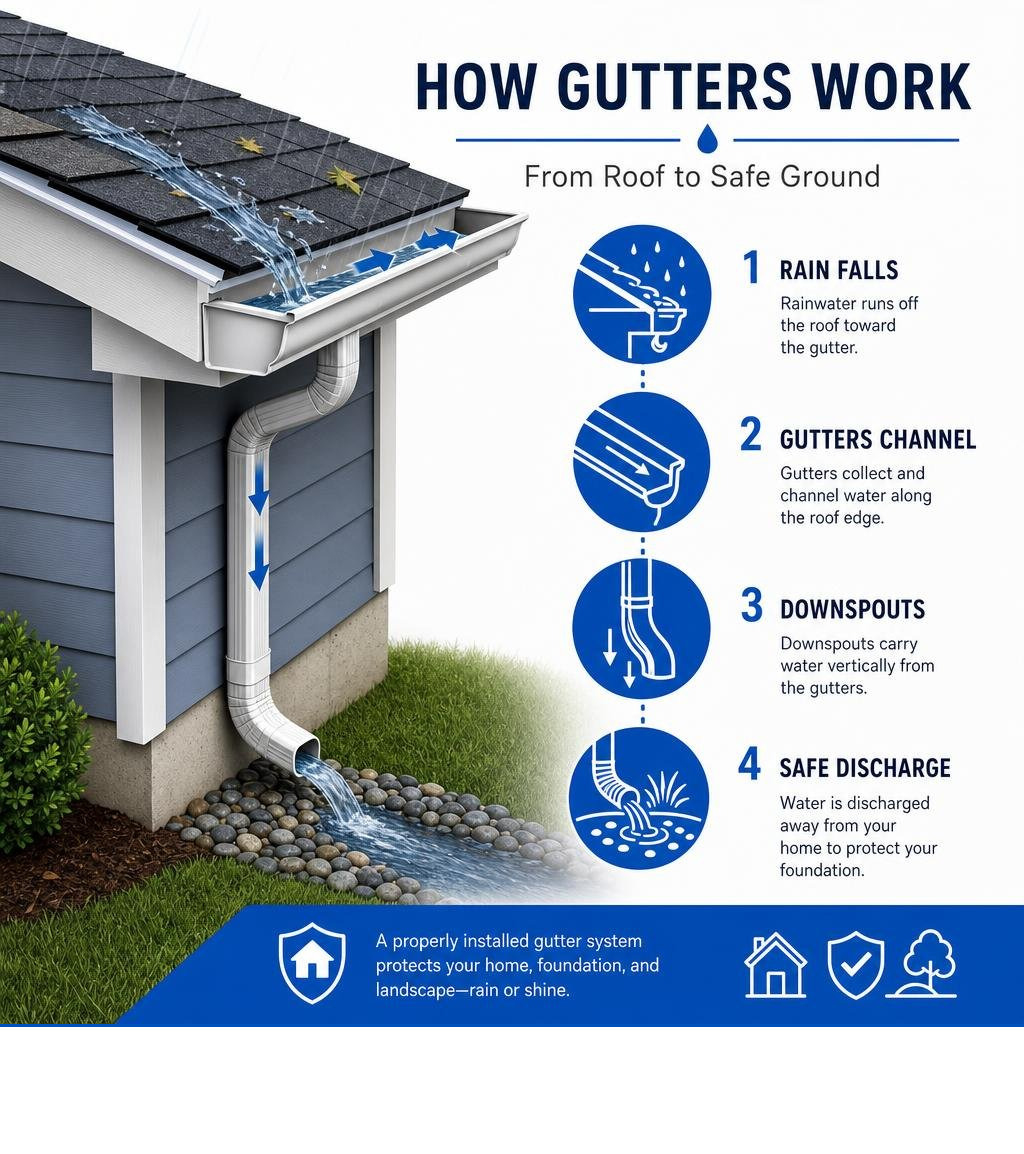
When it comes to water management, a minor installation error can lead to a major structural failure. Gutters may look like simple metal channels, but they function as a highly engineered water-routing system. Professional gutter installation services ensure that every component—from the fascia board to the downspout discharge point—is optimized to protect your home.
The Most Common Gutter Problems Proper Installation Solves
Without professional standards, standard gutter systems quickly succumb to environmental pressures. Some of the most common issues we identify and resolve include:
- Sagging runs: When gutters are mounted using weak hardware or spaced too far apart, the weight of water and debris causes them to bow downward.
- Loose hangers: Traditional spikes and nails pull out of fascia boards over time due to wood expansion and weight.
- Leaky seams: Sectional systems rely on sealants at every joint, which inevitably dry out, crack, and leak.
- Water overflow: Even clean gutters will overflow if they are undersized for the roof’s square footage or if the pitch is incorrect.
- Improper pitch: If a gutter is completely level, water pools in the channel, attracting pests and accelerating rust.
- Clogged downspouts: Poorly positioned or undersized outlets trap leaves and twigs, backing up the entire system.
- Fascia rot and siding stains: When water overflows the back of the gutter, it saturates the wooden fascia board and runs down the siding, causing rot and unsightly algae stains.
- Soil erosion and basement moisture: Downspouts that dump water directly at the base of the home saturate the soil, leading to foundation settling and basement leaks.
How gutter installation services Diagnose Roofline and Drainage Requirements
A successful installation starts with a comprehensive engineering assessment of your roofline. We do not use a one-size-fits-all approach. Instead, we analyze several technical variables to design a system that works:
- Roof Pitch and Valleys: Steep roofs shed water much faster than shallow ones. Additionally, where two roof planes meet in a valley, a massive volume of water is concentrated into a single point.
- Overhangs and Fascia Condition: We inspect the roof overhang and the structural integrity of the fascia boards. If the fascia is soft or rotting, it must be repaired before mounting new hardware.
- Runoff Volume and Sizing: We calculate the square footage of the roof surface draining into each run. This determines whether your home requires standard 5-inch gutters or high-capacity 6-inch gutters.
- Profile Selection: We help you select the ideal profile for your home’s architecture, whether that is the highly efficient K-style profile, the classic half-round profile, or commercial-grade box gutters.
To learn more about our specific approach to residential properties, explore our specialized Residential Gutter Installation page.
Professional Mounting, Pitch, and Downspout Placement Standards
To ensure long-term stability and perfect drainage, our crews adhere to strict structural standards during the installation process:
- Heavy-Duty Hidden Hangers: We completely avoid outdated spikes. Instead, we use heavy-duty internal hidden hangers.
- Screw Fastening: Every hanger is secured with structural screws driven deep into the solid wood of the fascia, ensuring they never back out.
- Precise Hanger Spacing: Hangers are spaced every 24 inches or closer to support heavy water loads during severe Central Virginia downpours.
- Slope Calculation: Gutters must slope toward the downspouts at a precise angle—typically 1/4 inch of fall for every 10 feet of run. Too steep, and the gutter looks crooked; too flat, and water pools.
- Strategic Downspout Placement: We place downspouts to maximize drainage efficiency while keeping them visually unobtrusive.
- Advanced Discharge Solutions: To prevent foundation damage, downspouts are paired with splash blocks or routed into underground drains to carry water far away from the home.
- Flow Testing: Before leaving the site, we run water through the system to verify the pitch and ensure there are no blockages or stagnant pools.
Workmanship Protections and Service Guarantees to Look For
When planning your home’s exterior work, written protections are just as important as the physical materials. Homeowners should always look for gutter companies that offer:
- Written Workmanship Terms: A guarantee that covers the physical installation, ensuring that if a pitch issue or leak occurs due to installation errors, it will be corrected.
- Comprehensive Material Coverage: Manufacturers’ warranties on the metal finish, protecting against peeling, cracking, or rusting.
- Licensed and Insured Crews: Protection against accidental property damage or worker injuries during the project.
- Rigorous Post-Installation Walkthrough: A final joint inspection where the lead installer shows you the completed work, explains the drainage path, and verifies that the site is completely clean of metal shavings and debris.
Seamless Gutters, Sectional Gutters, and Material Selection by Climate
The choice of gutter style and material directly dictates how well your system will perform under the specific weather conditions of your region.
Seamless vs. Sectional Gutters: Key Technical Differences
The primary division in gutter design is between seamless systems and traditional sectional systems. While sectional gutters are sold in pre-cut lengths at home improvement stores, seamless systems are fabricated on-site to the exact dimensions of your roofline.
| Feature | Seamless Gutters | Sectional Gutters |
|---|---|---|
| Fabrication | Custom extruded on-site from a mobile roll-forming machine | Pre-cut retail segments joined together during installation |
| Joints & Seams | Only at corners and downspout outlets | Seams every 10 to 20 feet along the entire run |
| Leak Risk | Extremely low; no mid-run joints to fail | High; sealant at seams degrades over time |
| Aesthetics | Clean, continuous, high-end appearance | Fragmented look with visible joints and connectors |
| Debris Resistance | Smooth interior prevents debris from snagging | Interior seams and fasteners trap leaves and twigs |
| Thermal Movement | Expands and contracts uniformly | Movement stresses joints, causing premature failure |
| Maintenance Needs | Minimal cleaning and inspection required | Frequent seam resealing and debris clearing |
Aluminum, Copper, Steel, and Vinyl Gutters for Different Conditions
Different materials react uniquely to temperature swings, humidity, and physical loads. Here is how the four primary gutter materials compare:
1. Aluminum Gutters
Aluminum is the undisputed gold standard for residential properties. It is lightweight, completely rust-proof, and highly customizable. It handles heavy rain easily and performs exceptionally well in climates with high humidity and changing seasons. On average, aluminum gutters have a lifespan of 20 years.
2. Copper Gutters
For historic homes or high-end architectural designs, copper offers unmatched beauty and longevity. It develops a rich green patina over time and can last up to 50 years. Copper requires specialized soldering during installation but provides incredible strength and curb appeal.
3. Galvanized Steel Gutters
Steel gutters offer extreme structural strength, making them ideal for areas prone to heavy snow loads or falling branches. However, even galvanized steel will eventually rust if water pools or if the protective zinc coating is scratched. They also have an average lifespan of 20 years but require more diligent maintenance than aluminum.
4. Vinyl Gutters
Vinyl is lightweight and rust-proof, but it is highly susceptible to temperature extremes. In regions with dramatic freeze-thaw cycles, vinyl becomes brittle, cracks under stress, and fades in direct sunlight. Because of these structural limitations, we generally do not recommend vinyl for long-term home protection.
Matching Gutter Style to Roof Design and Home Architecture
Beyond the material, the profile of the gutter must match both your home’s aesthetic and its drainage needs:
- K-Style Gutters: The most common profile on modern homes. The outer face resembles crown molding, blending seamlessly with standard fascia boards. They hold more water than half-round gutters of the same width, making them ideal for high-volume drainage.
- Half-Round Gutters: Featuring a simple, semi-circular trough, half-round gutters are the historic standard. They are frequently paired with round downspouts and external brass or copper brackets, making them perfect for historic restorations or rustic home styles.
- Box Gutters: Typically used on commercial properties or modern, minimalist residential designs, box gutters are wider and deeper, designed to handle massive amounts of water from large roof areas.

Installation Timeline, Replacement Signals, and Project Scope Factors
Understanding the logistics of a gutter replacement helps you plan effectively and avoid unexpected disruptions.
How Long a Typical Installation or Replacement Takes
For most standard homes, professional gutter installation services are completed surprisingly quickly.
- Same-Day Completion: A typical single-story or straightforward two-story home can easily be completed within several hours to a single day.
- 1 to 2 Days for Complex Projects: Larger properties, homes with highly complex rooflines (multiple gables, turrets, or steep pitches), or historic homes requiring soldered copper may require up to two days.
- Weather Dependencies: High winds, heavy rain, or freezing temperatures can delay installation, as working on wet roofs or handling long metal runs in high winds presents safety risks.
Signs a Home Needs New Gutters Instead of Repairs
How do you know when it is time to stop patching your old system and invest in a complete replacement? Watch for these key structural indicators:
- Repeated leaks: If you are constantly sealing leaks at joints only for new ones to appear nearby.
- Multiple seam failures: Sectional gutters that are pulling apart at the seams along multiple runs.
- Sagging sections: Gutters that have warped or bent to the point where they can no longer hold a proper slope.
- Visible rust or cracks: Orange rust spots on steel or physical cracks in vinyl or aluminum.
- Gutters pulling away: Large gaps showing between the back of the gutter and the fascia board, often caused by loose spikes or rotting wood.
- Peeling exterior paint or rotten fascia: Water spilling over the back of the gutter saturates the trim, causing paint to bubble and wood to rot.
- Water pooling near the foundation: Frequent basement dampness, shifting walkways, or eroded soil directly beneath the roofline.
Scope Factors That Change the Installation Plan
Every home has unique structural challenges that influence the scope of the project:
- Linear Footage and Stories: The total length of the roofline and the height of the home dictate the equipment and safety measures required.
- Downspout Quantity: High-volume roof sections require additional downspout outlets to prevent backup.
- Fascia and Soffit Repair: If old gutters have been leaking for years, we often must replace rotten fascia boards before mounting the new system.
- Underground Drainage Integration: Connecting downspouts directly to underground pipes to carry water away from walkways and driveways.
- Local Regulations and HOA Rules: Some historic districts or homeowners’ associations have strict rules regarding gutter profiles, materials, and colors. For instance, homes in historic areas may require half-round copper systems rather than modern K-style aluminum.
We tailer our plans closely to these local architectural demands. Homeowners can read more about our localized solutions in our guides on Goochland Gutter Installation That Actually Works and Mechanicsville’s Best Gutter Installation Services.
Drainage Protection, Post-Installation Maintenance, and Gutter Guards
A newly installed gutter system is a key part of your home’s structural protection. Understanding how it protects your property and how to maintain it will ensure it performs flawlessly for decades.
How Proper Gutters Protect the Foundation, Siding, and Roof
A professionally designed gutter system acts as a shield, controlling water from the moment it hits your shingles until it is safely discharged.
- Foundation Preservation: When water falls directly from the roof to the ground, it saturates the soil surrounding your foundation. In areas with clay-heavy soils, this moisture causes the clay to expand and contract dramatically, leading to foundation cracks and settling.
- Siding and Trim Protection: Overflowing water runs down siding, leaving unsightly stains, promoting mold growth, and rotting wooden window frames and doors.
- Roof and Fascia Integrity: Gutters mounted with the correct pitch prevent water from backing up under the lower edge of your shingles, protecting your roof deck from rot and ice dams.
- Landscaping and Driveway Protection: Directing water away prevents soil erosion, preserves landscaping, and prevents water from pooling on driveways where it can cause cracking and shifting.
Maintenance Required After New Gutters Are Installed
Even the highest-quality seamless gutters require basic care to perform at their best. Homeowners should establish a consistent maintenance schedule:
- Twice-Yearly Cleaning: To help avoid serious water damage, gutters should be cleaned at least twice a year—once in early spring and once in early fall.
- Storm Inspections: Walk around your property during a heavy rainstorm to verify that water is flowing smoothly and downspouts are discharging cleanly.
- Flushing Downspouts: Periodically run a hose down your downspouts to clear out small debris, roof grit, and pine needles that may have accumulated.
For complete details on professional upkeep, refer to our comprehensive guide on Residential Gutter Cleaning or read Everything Midlothian Homeowners Need to Know About Gutter Care. If you are located in the Midlothian area, we also offer trusted ongoing care through our Midlothian Gutter Maintenance Services You Can Trust page.
Do Gutter Guards Eliminate Cleaning?
The short answer is no—but they dramatically reduce the frequency and difficulty of maintenance.
Gutter guards act as a physical barrier, keeping out large leaves, twigs, and nesting pests while allowing water to pass through freely. High-quality micro-mesh systems can filter out even tiny debris like pine needles and seeds. However, some fine roof grit and organic dust will still find their way into the system over time.
Think of gutter guards as a system that reduces your maintenance load from a heavy biannual chore to a simple periodic check. To explore options and understand the technology behind these systems, visit our dedicated Gutter Guards page, or read our deep-dive article: Maintenance-Free Gutter Guards: Are They Real or Just a Pipe Dream?.
Frequently Asked: Are gutter installation services Safer Than DIY?
Yes, professional installation is significantly safer and more reliable. Gutter installation requires working at heights on tall ladders or scaffolding while handling long, unwieldy, and sharp metal runs. Professional crews use specialized safety harnesses, heavy-duty staging equipment, and industrial roll-forming machines to complete the job safely and with extreme precision.
Attempting to mount gutters yourself without professional tools often results in improper pitching, damaged fascia boards, and serious safety risks. If you are considering DIY cleaning or maintenance, protect yourself by reviewing our resource on Rain Gutter Cleaning Services That Won’t Leave You Drained.
Frequently Asked: What Happens During the Final Installation Inspection?
During the final quality control check, our lead installer conducts a thorough physical assessment of the entire system:
- Water Flow Test: We run water through every run to confirm that the pitch is perfect and water drains rapidly without pooling.
- Hanger and Outlets Check: We verify that every hidden hanger is securely fastened and that all downspout connections are sealed and tight.
- Fascia and Shingle Alignment: We ensure that the gutter sits perfectly beneath the drip edge of your roof without interfering with your shingles.
- Property Cleanup: We perform a meticulous sweep of your yard, walkways, and landscaping to remove all metal clippings, old hardware, and debris.
Frequently Asked: How Often Should Gutters Be Cleaned After Installation?
Even with a brand-new system, we recommend a minimum of two cleanings per year—once during early spring to clear out winter debris and once in the fall after the leaves have dropped. If your property is heavily wooded, especially with pine trees or oaks, you may require more frequent cleanings.
To help you plan, check out our seasonal guides: Fall in Love with Clean Gutters: A Seasonal Prep Guide and Guard Your Time by Cleaning Gutters the Right Way. For residents in specific areas, we also offer localized insights via The Best Gutter Cleaning Services in Mechanicsville and our comprehensive guide on combining home maintenance services, Power Wash and Gutter Cleaning for a Happy Home.
Conclusion
A high-performing gutter system is your home’s primary defense against water damage. From protecting your foundation and siding to preserving your roofline, proper professional installation ensures that rainwater remains a resource for your yard rather than a threat to your structure.
We bring reliable workmanship and technical installation expertise to every gutter project we undertake. We serve homeowners and businesses across the Greater Richmond area, including Richmond, Henrico, Chesterfield, Midlothian, Glen Allen, Short Pump, Mechanicsville, Ashland, Hanover, Powhatan, Goochland, Bon Air, Moseley, Tuckahoe, White Stone, Manakin Sabot, and Central Virginia.
Ready to protect your property with a custom-engineered drainage system? Explore our Residential Gutter Installation services today and schedule your professional on-site consultation.

