


Best Local Roof Cleaning Services Near You
Why Your Roof Needs Professional Cleaning Services
Roof cleaning services remove moss, algae, lichen, and black streaks that silently damage your roof over time. Here’s what you need to know at a glance:
| Question | Quick Answer |
|---|---|
| What is roof cleaning? | Professional removal of moss, algae, lichen, and organic buildup from your roof |
| Best method? | Soft washing — low pressure with biodegradable solutions |
| How often? | Every 1–2 years; annually in wet or heavily shaded areas |
| Why does it matter? | Prevents leaks, rot, and premature roof failure; extends lifespan by years |
| DIY or professional? | Professional — DIY methods risk shingle damage, leaks, and voided warranties |
Your roof is one of the most expensive parts of your home to replace. Yet most homeowners never look at it until something goes wrong.
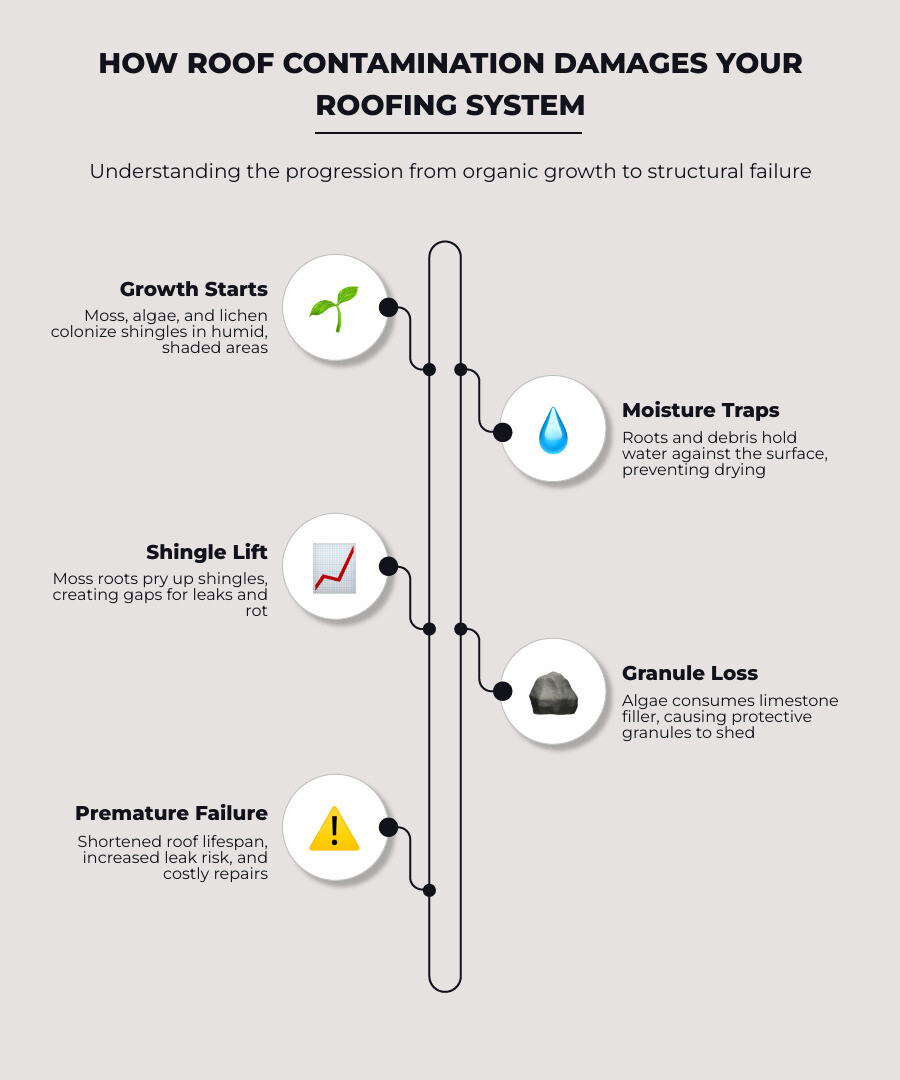
The problem is that organic growth like moss, algae, and lichen doesn’t just look bad — it actively breaks down roofing materials. Moss roots work their way under shingles. Algae feeds on the limestone filler inside asphalt shingles. Lichen removes protective surface layers. Left unchecked, this biological damage shortens a roof’s lifespan by years.
In the Richmond area, seasonal humidity, heavy tree cover, and wet winters create near-perfect conditions for this kind of growth to take hold — and spread fast.
I’m James Kastelein, owner of Alpha Exterior Solutions, and I’ve built the company around delivering professional roof cleaning services that protect homes throughout the Richmond area without causing the damage that improper methods often leave behind. Read on for everything you need to make a smart, informed decision about your roof.
What Roof Cleaning Services Include and Why They Matter
At a technical level, roof cleaning is controlled biological and debris removal. We are not just making a roof look better from the street. We are removing contaminants, reducing moisture retention, improving drainage, and helping roofing materials dry the way they were designed to dry.
A complete roof cleaning service may include:
- Removal of leaf debris and branch litter
- Treatment for algae, moss, and lichen
- Elimination of black streaks and staining
- Cleaning of roof valleys where buildup collects
- Gutter and downspout clearing when needed
- Preventive treatment to slow regrowth
- Visual review of roof trouble spots
For most homes in Richmond, Henrico, Chesterfield, Midlothian, Glen Allen, Short Pump, Mechanicsville, Ashland, Hanover, Powhatan, Goochland, Bon Air, Moseley, Tuckahoe, White Stone, Manakin Sabot, and surrounding Central Virginia areas, the biggest issue is not dramatic storm damage. It is slow, sneaky, damp-condition damage. The kind that grows quietly while your roof minds its business.
What roof cleaning is and what technicians remove
The main targets of professional cleaning are:
- Moss
- Algae
- Lichen
- Black streaks
- Damp leaf debris
- Small organic buildup in valleys and around flashing
Black streaks are often tied to algae growth, especially on asphalt shingles. Moss forms thicker mats that trap water and can wedge under shingle edges. Lichen is even more stubborn because it bonds tightly to the surface and can wear away protective layers over time.
This matters because organic growth does not stay politely on top of the roof. It holds moisture against the surface, slows drying, and creates ideal conditions for further colonization.
Why neglected roofs deteriorate faster
A dirty roof usually stays wet longer. A wet roof ages faster.
When buildup is left in place, we commonly see:
- Shingle edges lifting
- Faster granule loss on asphalt shingles
- Increased risk of leaks
- Rot in adjacent wood components
- Moisture intrusion around flashing and penetrations
- Premature wear that can cut years off roof life
Industry research commonly notes that proper roof cleaning can help extend lifespan by around 5 to 10 years when it prevents moss and algae damage from taking hold. That is a major maintenance win for a service that is preventive by design.
How roof appearance affects inspections, insurance, and property value
Roof condition affects more than looks.
A stained or overgrown roof can raise questions during:
- Home sale inspections
- Insurance reviews
- Routine exterior maintenance checks
- HOA appearance standards in some neighborhoods
A clean roof also improves curb appeal immediately. Dark algae staining can make a roof look older than it is, and heavy organic growth can suggest neglect even when the rest of the property is well maintained.
If you are seeing staining or moss already, our guide on removing black streaks and moss from your Richmond roof goes deeper into what those marks usually mean.
What Causes Moss, Algae, and Roof Staining

In Central Virginia, roofs deal with long humid stretches, seasonal pollen, tree debris, and shaded sections that dry slowly. Those conditions are perfect for biological growth.
Why moss and algae thrive on roofs
Several factors drive roof contamination:
- Humidity and frequent moisture
- Shade from trees
- North-facing roof slopes with less direct sun
- Debris trapped in valleys
- Poor drainage
- Aging roofing materials
- Limestone filler in asphalt shingles, which algae can feed on
One of the most common causes of black staining is a blue-green algae known as Gloeocapsa magma. It spreads across shingles and creates those familiar dark streaks many homeowners mistake for dirt.
Moss thrives where moisture lingers. That usually means shaded roof planes, debris-packed areas, and places where airflow is limited.
The damage caused by moss, lichen, and black algae
Each growth type causes different problems.
Moss:
- Holds moisture against the roof
- Expands under shingle edges
- Can contribute to lifted shingles and water intrusion
Lichen:
- Anchors tightly to the surface
- Wears down protective outer layers
- Can leave roofing materials more porous over time
Black algae:
- Stains the roof
- Traps heat and affects appearance
- Signals microbial growth that should be addressed before it spreads further
The damage is not only cosmetic. Moisture retention is the real enemy. Once damp conditions persist, the whole roofing system is under more stress.
Early warning signs a roof needs cleaning services
Look for these signs:
- Black streaks on shingles
- Green patches or fuzzy growth
- White or pale crusty spots from lichen
- Debris-filled roof valleys
- Overflowing gutters
- Sections of roof that stay wet longer than others
- Visible growth near chimney flashing, skylights, or dormers
If you want a closer look at common local warning signs, read our post on removing black streaks and moss from your Richmond roof.
Safe Roof Cleaning Services Methods by Roof Type
The right method depends on roof material, age, condition, pitch, and the type of growth present. The safest answer is not always “more force.” In fact, on roofs, more force is often how expensive mistakes happen.

| Method | How It Works | Best Use | Main Risks |
|---|---|---|---|
| Soft washing | Low pressure plus professional cleaning solution | Asphalt shingles, many tile roofs, many metal roofs | Requires proper chemical control and dwell time |
| Pressure washing | Higher-pressure water cleaning | Limited specialty cases only | Granule loss, sealant damage, water intrusion, coating wear |
Why soft washing is the preferred roof cleaning services method
Soft washing is the preferred method for most residential roof cleaning because it relies on low pressure and solution chemistry rather than brute force.
A professional soft wash process typically involves:
- Applying a roof-compatible cleaning solution
- Allowing proper dwell time so biological growth breaks down
- Using low pressure to rinse or manage the treatment
- Treating growth at the root level, not just the visible surface
Depending on the roof and contamination, solutions may include surfactants and carefully controlled active ingredients commonly used in professional roof cleaning. The point is not to blast growth off. The point is to kill it, release it, and clean the surface without harming the roof system.
For asphalt shingles in particular, soft washing is generally the most appropriate approach because it helps protect granules and reduces the chance of mechanical damage.
When pressure washing is limited or avoided
Pressure washing has a place on some exterior surfaces, but roofs are a different story.
On many roofs, high pressure can cause:
- Granule stripping on shingles
- Damage to flashing
- Loosening of sealants
- Water forced under roofing materials
- Surface wear on tile
- Damage to coatings on metal panels
That is why we use methods that fit the roofing material rather than one-size-fits-all cleaning. Roofs do not appreciate being treated like driveways. They are far more expensive and much less forgiving.
Special cleaning considerations for asphalt, tile, and metal roofs
Asphalt shingles:
- Require low-pressure treatment
- Are vulnerable to granule loss
- Benefit from root-level algae and moss treatment
Clay and concrete tile:
- Need careful foot traffic planning because tiles can crack
- Often require targeted treatment for lichen and moss
- Should be cleaned without forcing water into overlaps
Metal roofing:
- Must be cleaned in a way that protects coatings and finishes
- Needs attention around seams, fasteners, and oxidation-prone areas
- Usually responds well to gentle washing when contamination is organic
If moss is the main issue, our article on how to kill roof moss for good explains why proper treatment matters more than surface scraping alone.
Professional Process, Safety Standards, and Aftercare
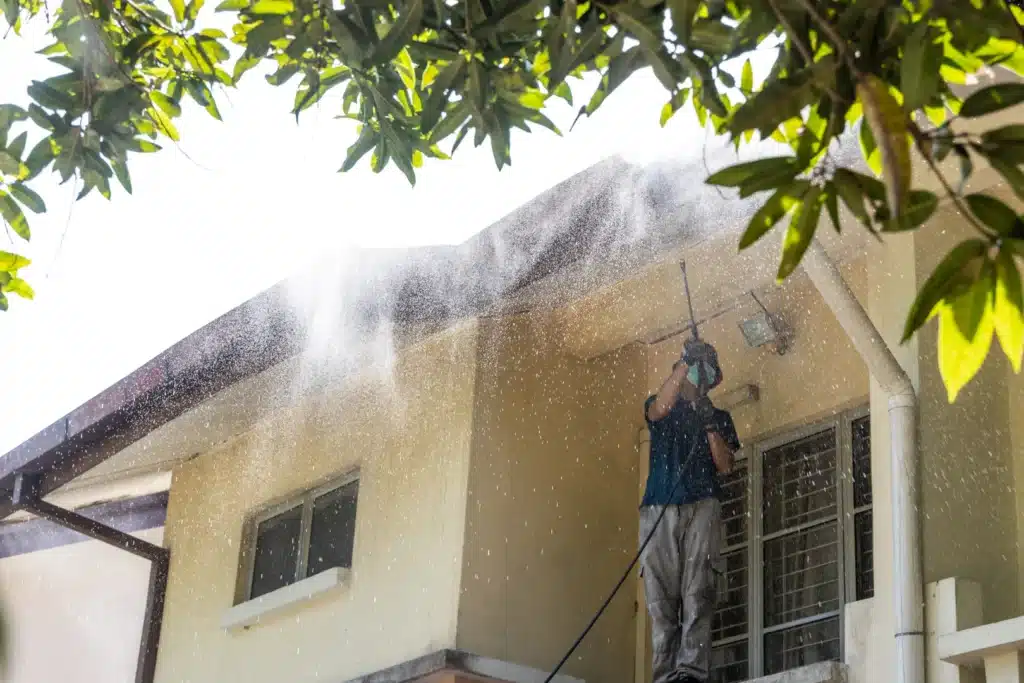
Roof cleaning is not just chemistry and rinse control. It is also a serious safety operation. A good result starts with access planning, fall protection, site protection, and runoff management.
Safety equipment and site protection used by trained crews
Professional roof cleaning crews should use job-appropriate safety equipment such as:
- Non-slip footwear
- Harness systems
- Ladder stabilizers or stand-offs
- Roof access equipment
- Rope-assisted positioning where needed
- Site protection for landscaping and exterior surfaces
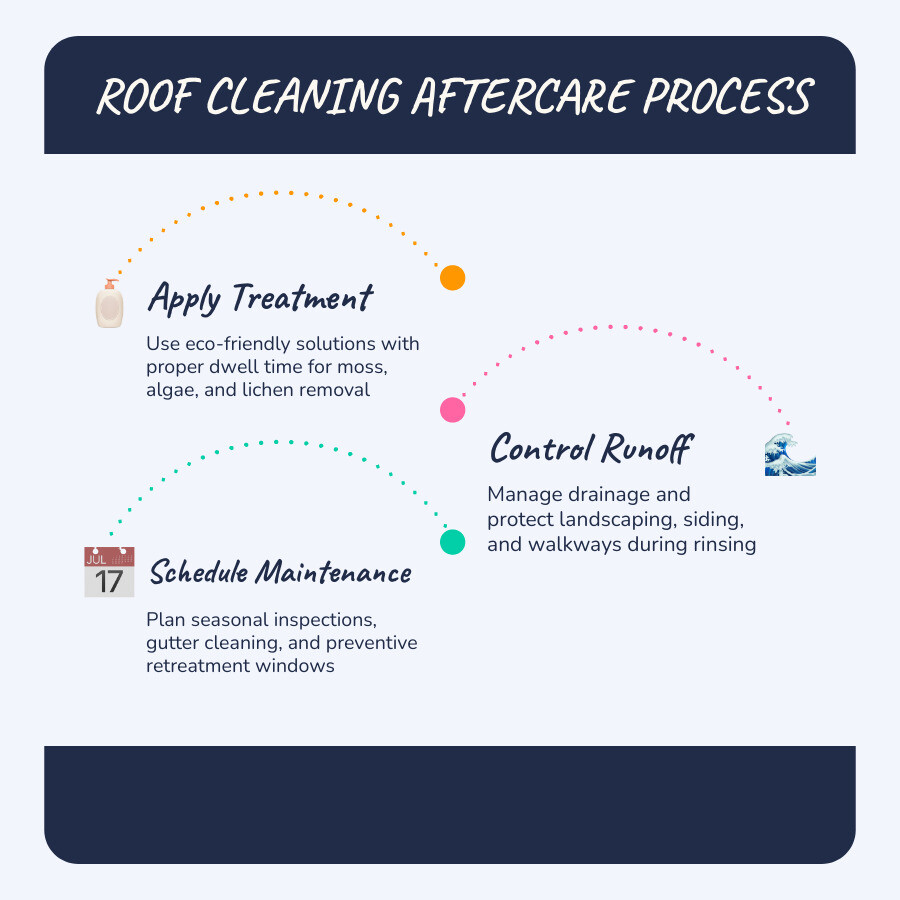
We also pay attention to the property below the roofline. Plants, siding, walkways, and gutters all need protection during the cleaning process. That means controlled application, runoff awareness, and cleanup that is as deliberate as the wash itself.
Products, treatments, and eco-friendly solution selection
Professional roof cleaning products vary by material and contamination type, but common categories include:
- Biodegradable cleaning agents
- Algae and moss treatments
- Antifungal solutions
- Preventive treatments designed to slow regrowth
Some contractors also use zinc-based treatments in certain situations to discourage future growth. The right choice depends on the roof, surrounding landscape, drainage pattern, and environmental conditions.
Our focus is on eco-friendly methods and controlled application. Good roof cleaning is not about dumping harsh product everywhere and hoping for the best. It is about selecting the right treatment, using proper dwell time, and controlling where that solution goes.
Aftercare steps that help prevent regrowth
Cleaning is step one. Keeping the roof cleaner longer is step two.
Helpful aftercare measures include:
- Routine gutter cleaning
- Trimming overhanging branches
- Monitoring shaded slopes
- Scheduling seasonal inspections
- Applying retreatment when appropriate
- Removing debris before it becomes damp compost on the roof
Homes surrounded by mature trees in Richmond-area neighborhoods often need more proactive maintenance simply because shade and debris load are higher. If you want local guidance, see our post on top rated roof washing in Chesterfield don’t let algae raise the roof.
How Often Roofs Should Be Cleaned and When to Schedule Service
For most homes, professional roof cleaning every 1 to 2 years is a practical baseline. In wetter or more heavily shaded areas, annual service may make sense.
Factors that influence cleaning frequency
Not every roof follows the same schedule. Frequency depends on:
- Amount of shade
- Tree coverage
- Local humidity
- Rainfall patterns
- Roof pitch
- Ventilation
- Roof age
- Existing moss or algae history
A newer roof in full sun may stay cleaner longer. An older roof under dense tree canopy may need attention much sooner.
Best times of year for roof cleaning and moss treatment
In Central Virginia, spring and fall are often the most practical times to schedule service.
Spring is helpful for:
- Removing winter buildup
- Addressing early-season moss and algae
- Improving drainage before heavier warm-weather storms
Fall is helpful for:
- Clearing leaf debris
- Preparing the roof and gutters for winter moisture
- Reducing damp organic buildup before colder weather sets in
The best exact timing depends on weather windows, roof condition, and how established the growth is. We prefer conditions that allow treatments to work properly and cleanup to be thorough.
Why proactive maintenance outperforms reactive cleanup
Waiting until moss becomes obvious usually means the roof has already been staying wet too long.
Proactive service helps with:
- Longer roof life
- Less biological spread
- Fewer drainage problems
- Lower chance of hidden moisture issues
- Better-looking shingles year-round
In simple terms: maintenance is cheaper in effort than neglect is in consequences. Or, put another way, moss is a terrible long-term tenant.
For a local perspective, visit the best roof cleaning Richmond VA can offer.
Choosing the Best Local Roof Cleaning Services Near You
Not all roof cleaning services are equal. The right contractor should be focused on roof compatibility, safety, process control, and long-term roof protection.
Questions to ask before hiring a roof cleaning contractor
Before hiring anyone, ask:
- Are you insured for roof cleaning work?
- What cleaning method will you use on my roof type?
- Do you use low pressure on shingles?
- How do you protect plants and surrounding surfaces?
- What is your process for runoff control and cleanup?
- Do you provide before-and-after documentation?
- Do you inspect for visible roof issues during service?
- What aftercare or maintenance recommendations do you provide?
A good contractor should answer clearly and specifically, not vaguely and confidently. Vague confidence is very popular in home services. It is also not a cleaning method.
What reputable companies offer after the cleaning is done
Strong providers typically offer some combination of:
- Clear process explanations
- Documented results
- Maintenance recommendations
- Retreatment options when applicable
- Inspection notes on visible concerns
- A satisfaction-oriented service approach
Some companies also offer ongoing maintenance reminders or integrated gutter service to help protect the roof after cleaning. That matters because a clean roof with clogged gutters is still not a happy roof.
Why professional service beats risky DIY methods
DIY roof cleaning sounds simple until gravity, chemicals, and roofing materials all vote against you at once.
The biggest DIY risks include:
- Falls and ladder accidents
- Broken shingles or tiles from improper foot traffic
- Granule damage from aggressive scrubbing
- Water intrusion from improper rinsing or pressure use
- Plant damage from misused chemicals
- Incomplete treatment that removes visible growth but leaves regrowth behind
Professional service is not just about convenience. It is about using the correct method, equipment, and treatment plan for the roof you actually have.
Use this quick vetting list when comparing contractors:
- Confirm insurance coverage
- Ask what method they use on your roof type
- Ask how they handle moss, algae, and lichen differently
- Ask how they protect landscaping
- Ask whether they also address gutter flow and debris
- Ask what maintenance steps they recommend after cleaning
Conclusion
The best roof cleaning strategy is not aggressive. It is informed, controlled, and preventive.
When roof cleaning services are done correctly, they remove harmful growth, improve drainage, reduce moisture-related wear, and help extend the usable life of your roof. In a climate like Greater Richmond, where humidity, tree cover, and seasonal moisture create ideal conditions for buildup, that kind of maintenance is not optional for long-term roof protection.
At Alpha Exterior Solutions, we approach roof cleaning as a technical service, not a cosmetic shortcut. We use roof-appropriate methods, eco-friendly processes, and professional site protection to help homeowners across Central Virginia keep their roofs performing the way they should.
If you want to learn more about our process, visit our Residential Roof Cleaning page.

