


A-Z Guide to Building Washing Services
What Are Building Washing Services — and Why Do They Matter?
Building washing services are professional exterior cleaning solutions that remove dirt, mold, algae, mildew, and other contaminants from the outside surfaces of residential and commercial properties.
Here’s a quick summary of what you need to know:
- What it is: Specialized cleaning of building exteriors using soft washing, pressure washing, or a combination of both
- What it removes: Mold, algae, mildew, biological growth, grime, oxidation, and atmospheric staining
- Who needs it: Homeowners, commercial property owners, HOAs, property managers, and building owners
- How often: Most properties benefit from cleaning once or twice per year — more frequently in humid or high-traffic environments
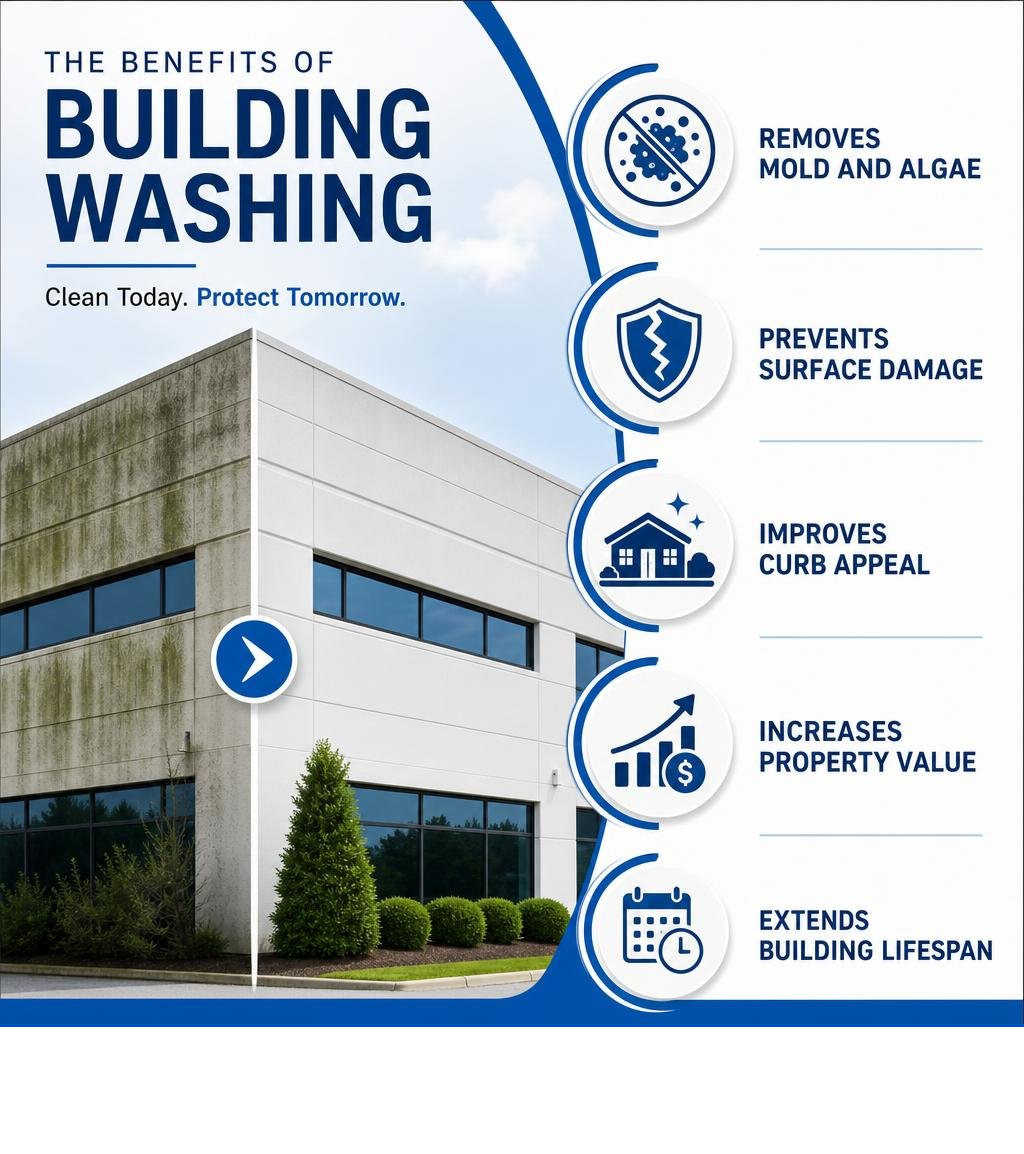
- Key benefit: Prevents long-term surface damage, improves curb appeal, and preserves property value
Dirt and biological growth don’t just make a building look bad. They actively damage it. Mold and algae trap moisture against siding, brick, and stucco, accelerating deterioration over time. Left untreated, what starts as a surface stain can become a structural problem — and a much more expensive fix.
That’s true whether you own a single-family home in the suburbs or manage a commercial property with dozens of tenants. Regular exterior cleaning isn’t just cosmetic maintenance. It’s preventative care for one of your most valuable assets.
We have built our operations around delivering professional building washing services to homeowners and businesses throughout the Richmond, Virginia area. In this guide, we will walk you through everything — from cleaning methods and material compatibility to environmental compliance and how to choose the right provider.
Understanding Professional Building Washing Services
When we look at a commercial facility or a multi-family residential complex, we are not just looking at one uniform surface. Modern architecture relies on a complex assembly of materials, each with unique physical properties, chemical vulnerabilities, and structural roles. Professional building washing services require a deep understanding of material science and surface calibration to clean effectively without causing structural degradation.
Atmospheric pollutants are constantly settling on your building’s exterior. In the Greater Richmond region—from the urban density of Short Pump to the historic corridors of Ashland—buildings face a steady deposit of carbon emissions, industrial particulate matter, seasonal pollen, and mineral-heavy dust. Over time, these pollutants bond chemically with building substrates.
For example, when nitrogen oxides and sulfur dioxide from vehicle exhaust mix with atmospheric moisture, they form mild acidic compounds that degrade limestone, concrete, and mortar joints.
Properly addressing these contaminants requires a specialized approach. Our team utilizes advanced Commercial Building Washing techniques that isolate the specific pollutant and apply the correct chemical neutralizing agent. This scientific approach ensures that the bond between the grime and the building facade is broken safely, preserving the underlying material’s structural integrity.
Key Differences Between Pressure Washing and Building Washing
A common misconception in property maintenance is that “pressure washing” and “building washing” are interchangeable terms. In reality, relying solely on high-pressure water to clean a building facade is a recipe for catastrophic material failure.
- Pressure Washing (High-PSI): This method relies on raw mechanical force—often between 2,500 and 4,000 PSI (pounds per square inch)—to blast contaminants off a surface. While highly effective for dense, durable substrates like concrete walkways or stone pavers, high-pressure water can easily slice through wood siding, erode mortar joints, strip protective coatings from metal panels, and shatter double-pane window seals.
- Building Washing (Low-PSI / Soft Washing): Professional building washing is a systemized approach that prioritizes substrate protection and structural preservation. We calibrate our equipment to low-pressure settings (typically under 500 PSI, similar to a strong garden hose) and rely on specialized, biodegradable chemical solutions to dissolve contaminants. The water stream serves merely as a delivery and rinsing mechanism for the cleaning agents.
By prioritizing chemical kinetics over physical force, we ensure that the building’s envelope remains entirely watertight, preventing internal moisture intrusion that leads to hidden rot and structural mold.
Signs Your Property Needs Building Washing Services
Waiting until a building is completely covered in black streaks is a reactive maintenance strategy that often results in premature material failure. Property managers should monitor their envelopes for early indicators of degradation.
Here are the primary signs that it is time to schedule a professional cleaning:
- Organic Growth (Algae, Mold, and Mildew): This is highly common on northern-facing walls or heavily shaded elevations in humid climates like Richmond, Midlothian, and Glen Allen. Green, yellow, or black staining indicates active biological colonies that are digesting organic binders within your exterior paint or stucco coatings.
- Soot and Carbon Accumulation: Dark, greasy runs beneath window sills, rooflines, and decorative trim are signs of atmospheric carbon buildup. This soot acts like sandpaper when blown by winds, slowly abrading the building’s finish.
- Oxidization: This appears as a chalky, white residue on vinyl siding, aluminum panels, or painted metal surfaces. It is caused by UV degradation of the material’s protective sealants. If not washed and treated promptly, the substrate becomes brittle and loses its color permanently.
- Masonry Staining and Efflorescence: White, powdery salt deposits (efflorescence) or dark rust-colored streaks on brickwork indicate that moisture is moving through the masonry, carrying minerals to the surface. Professional washing removes these deposits and prepares the surface for waterproofing sealants.
Regularly addressing these issues is highly beneficial. In fact, maintaining a routine schedule for exterior cleaning can reduce long-term structural maintenance costs by preventing premature material degradation. For commercial operators, the visual impact is equally significant: properties that maintain regular exterior cleaning schedules see higher tenant retention rates.
To learn more about how a clean exterior impacts your operations, read our article on A Fresh Face for Your Business with Commercial Building Exterior Cleaning.
Technical Cleaning Methods and Material Compatibility
Every building material reacts differently to water pressure, heat, and chemical exposure. A single-system approach will inevitably damage delicate surfaces while failing to clean durable ones.
Below is a technical comparison of how different cleaning methods align with common architectural substrates:
| Substrate Material | Recommended Cleaning Method | PSI Range | Primary Cleaning Agent | Risk of High Pressure |
|---|---|---|---|---|
| Stucco / EIFS | Soft Washing Only | 100 – 300 PSI | Sodium Hypochlorite + Surfactant | Cracking, water intrusion, delamination |
| Brick & Masonry | Low-to-Medium Pressure | 500 – 1,200 PSI | Mild Acidic/Alkaline Cleaners | Mortar erosion, face-brick spalling |
| Vinyl Cladding | Soft Washing | 150 – 400 PSI | Biodegradable Surfactants | Water forced behind panels, cracking |
| Concrete / Hardscape | High-Pressure / Heated | 2,500 – 3,500 PSI | Degreasers / Hydrocarbons | Minimal (highly durable surface) |
| Metal Panels | Soft Washing | 200 – 500 PSI | Neutral pH Detergents | Coating striping, denting, oxidation acceleration |
Soft Washing for Delicate Surfaces
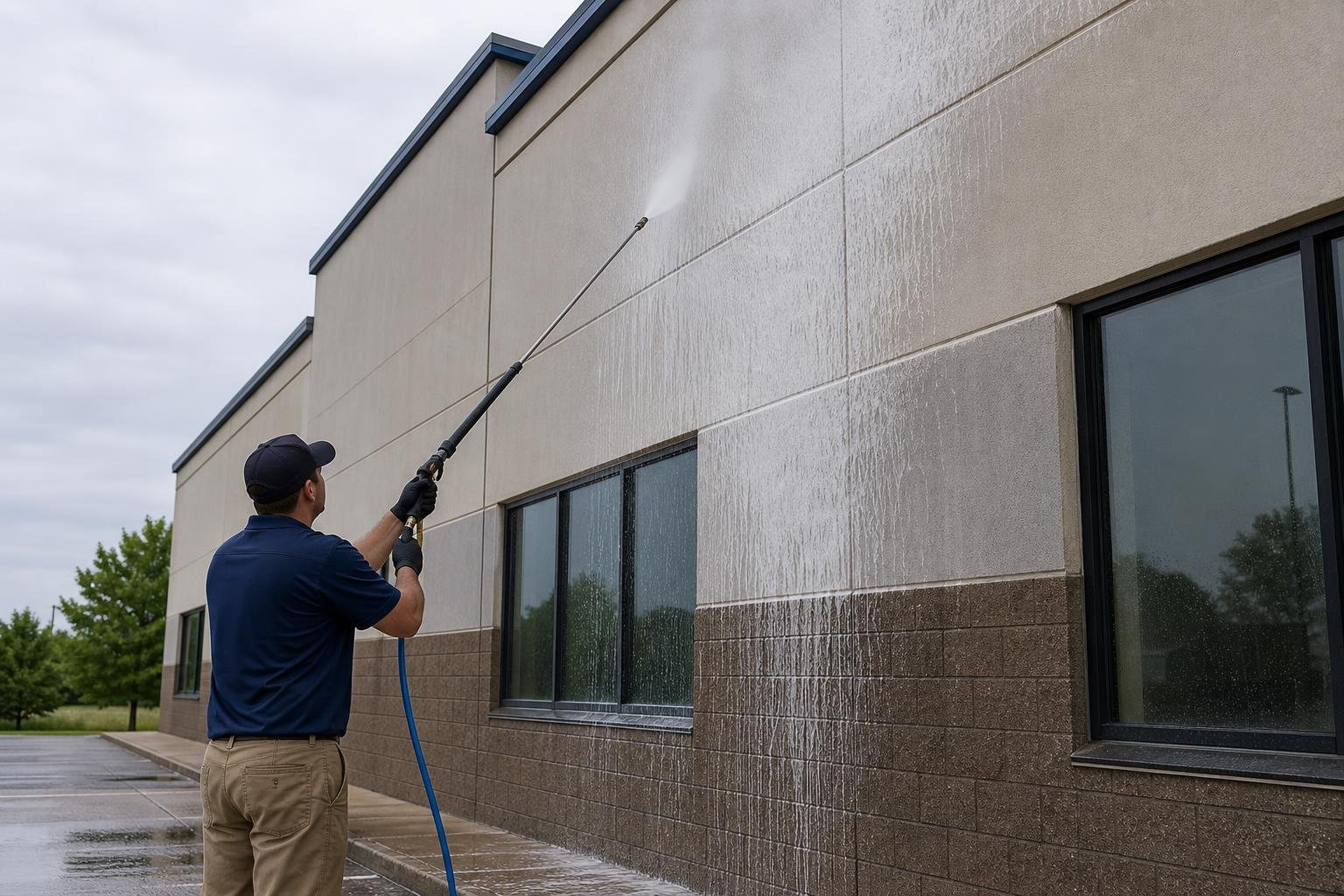
For materials like stucco, Exterior Insulation and Finish Systems (EIFS), painted wood, and vinyl cladding, soft washing is the industry-standard methodology. Stucco and EIFS are highly porous and structurally delicate; high-pressure water can easily tear through their thin synthetic outer layers, causing interior water damage and structural rot.
The soft washing process relies on low-pressure nozzles to apply a custom-blended, biodegradable solution. This solution contains specialized surfactants that break down the surface tension of water, allowing the cleaning agents to penetrate deep into the microscopic pores of the material.
Unlike pressure washing, which merely shears off the surface layers of mold and algae, soft washing kills the biological growth at its roots. This deep-level spore destruction ensures that the surface remains clean and free of biological regrowth for up to 18 months.
Furthermore, because soft washing uses minimal pressure, it maintains complete compliance with manufacturer warranties for siding and roofing materials, which are often voided by high-pressure cleaning.
High-Pressure and Heated Water Applications
While delicate vertical facades require a gentle touch, high-traffic horizontal surfaces demand a more aggressive approach. Concrete walkways, loading docks, dumpster pads, and parking garages accumulate heavy oil deposits, grease, tire marks, and embedded chewing gum.
For these surfaces, we utilize commercial-grade pressure washing equipment equipped with water heaters. Heating the water to temperatures between 180°F and 200°F is essential for grease emulsification. Just as hot water melts grease on kitchen dishes, thermal cleaning liquefies heavy petroleum hydrocarbons and animal fats embedded in porous concrete, allowing them to be safely flushed away.
This high-pressure, heated-water approach restores hardscapes to like-new condition, reducing slip-and-fall hazards and keeping high-traffic entryways safe for employees and customers alike.
Environmental Compliance and Wastewater Management

Modern building washing services are governed by strict environmental regulations, most notably the federal Clean Water Act administered by the Environmental Protection Agency (EPA). Under these regulations, discharging untreated wash water containing detergents, heavy metals, oils, or biological waste into municipal storm drains is illegal and carries severe financial penalties.
Because storm sewers drain directly into local waterways—such as the James River in Central Virginia—we treat environmental compliance as a core technical discipline.
Our standard operational protocols include:
- Storm Drain Protection: Before any washing begins, we map all nearby storm grates. We place physical blockades, such as drain seals, sandbags, or inflatable pipe plugs, to prevent any runoff from entering the system.
- Wastewater Containment & Recovery: We utilize specialized vacuum recovery surface cleaners and containment berms. As our equipment washes horizontal surfaces, high-powered vacuum systems capture the dirty water at the point of impact, transferring it to holding tanks on our utility trucks.
- Compliant Disposal: Once captured, the wastewater is either run through an on-site filtration system or transported to an authorized treatment facility for compliant disposal.
- Eco-Friendly Chemical Selection: All surfactants and detergents used in our soft washing processes are biodegradable and rapidly break down into harmless organic compounds upon contact with soil.
By managing runoff responsibly, we protect local ecosystems while shielding property owners from regulatory violations and environmental liability. To see where we provide these compliant services, visit our Service Areas page.
Selecting the Right Building Washing Services Provider
Choosing an exterior cleaning partner involves assessing their safety standards, technical training, and insurance coverage. High-access building cleaning is inherently hazardous and requires rigorous operational discipline.
When vetting a building washing service, property managers should demand documentation of the following:
- OSHA Compliance & Safety Training: Technicians must be trained in fall protection standards (OSHA 1910 and 1926), ladder safety, and the proper operation of aerial lifts.
- Roof Anchor Certification: For high-rise and multi-story structures, crews must inspect and verify the load-bearing capacity of rooftop anchor systems before rappelling or using suspended scaffolding.
- Comprehensive Liability Insurance: The provider should carry high-limit general liability, workers’ compensation, and commercial auto insurance, with the ability to issue a Certificate of Insurance (COI) naming your business or property management firm as an additional insured.
- Proven Track Record: Look for a provider with a portfolio of successfully completed multi-story and commercial projects. You can view examples of our professional execution by exploring our Commercial Gallery.
Frequently Asked Questions about Exterior Cleaning
How often should a commercial building be washed?
For the majority of commercial properties in the Greater Richmond and Central Virginia area, we recommend a biannual washing schedule—typically once in the spring to remove winter road salt and soot, and once in the late autumn after the leaf fall.
However, environmental factors and regional climate play a large role. Properties situated near high-traffic highways, industrial zones, or dense foliage may require quarterly cleanings to manage heavy soot and pollen deposits. High-traffic retail storefronts and restaurants benefit from more frequent cleanings of entryways, sidewalks, and dumpster pads to maintain a clean appearance.
Will soft washing chemicals damage surrounding landscaping?
No, when executed by trained technicians, soft washing will not harm your landscaping. Our preservation process begins before the cleaning solution is even mixed. We thoroughly pre-wet all surrounding grass, shrubs, and ornamental plantings with clean water. This saturates the soil and root systems, preventing them from absorbing any of the cleaning solution.
During the wash, we apply protective coverings over delicate flora and continuously rinse the landscaping with clean water to dilute any chemical overspray. Once diluted, our biodegradable cleaning agents quickly neutralize in the soil without leaving toxic residues.
What is the difference between building washing and window cleaning?
While both services improve the look of your building, they focus on different architectural components and utilize different techniques:
- Building Washing: This is a comprehensive facade cleaning service. It targets the entire building envelope, including siding, brickwork, EIFS, metal panels, soffits, fascia, and structural columns. The goal is to remove biological growth, atmospheric soot, and deep-seated stains from porous and non-porous surfaces.
- Window Cleaning: This service focuses specifically on glass panes, window frames, tracks, and seals. It utilizes specialized glass restoration techniques, pure-water feed poles, and squeegees to remove mineral spots, handprints, and environmental films, leaving a streak-free finish.
For the best results, many property managers choose to bundle these services, scheduling a comprehensive building wash followed immediately by a professional window cleaning.
Conclusion
A building’s exterior is its first line of defense against the elements and its primary visual representation to the public. Allowing atmospheric soot, mold, and biological growth to accumulate unchecked degrades the building envelope, lowers property value, and leads to costly structural repairs.
We combine state-of-the-art cleaning technology with a deep understanding of material science to deliver safe, effective, and environmentally compliant building washing services across the Greater Richmond area—including Henrico, Chesterfield, Midlothian, Glen Allen, and beyond. Whether you need to restore a multi-family housing complex, clean a commercial storefront, or maintain a large industrial facility, our team has the technical expertise to protect your investment.
To learn more about our commitment to excellence, visit our About Us page, or explore our specialized Commercial Building Washing solutions.
Ready to protect your property and restore its structural beauty? Contact us today to schedule a professional on-site evaluation and receive a customized maintenance plan tailored to your building’s unique architectural needs.

