



Guard Your Time by Cleaning Gutters the Right Way
Gutter Guards Don’t Mean Gutter-Free: What Richmond Homeowners Need to Know
Cleaning gutters with guards is something most homeowners assume they’ll never have to do — but that assumption can lead to real damage.
Here’s the short version of what you need to know:
- Gutter guards reduce how often you clean, but don’t eliminate it
- Fine debris like pine needles, pollen, and shingle granules still builds up
- Most homes need gutter maintenance at least twice a year — spring and fall
- Signs you’re overdue: water overflowing, sagging gutters, or plant growth on guards
- You can clean many guard types yourself, but multi-story homes or complex systems may need a pro
Gutter guards are a smart investment. They block leaves, twigs, and larger debris from clogging your system. But smaller particles slip through or pile up on top — and over time, that buildup can cause water to overflow, damage your fascia, and even threaten your foundation.
If you’ve got trees nearby (and in Richmond, you almost certainly do), this matters even more.
I’m James Kastelein, owner of Alpha Exterior Solutions, and I’ve spent years helping Richmond-area homeowners stay on top of cleaning gutters with guards safely and effectively. In this guide, I’ll walk you through exactly what to do, what tools you need, and when it makes sense to call in a professional.
Why Guarded Systems Still Require Maintenance
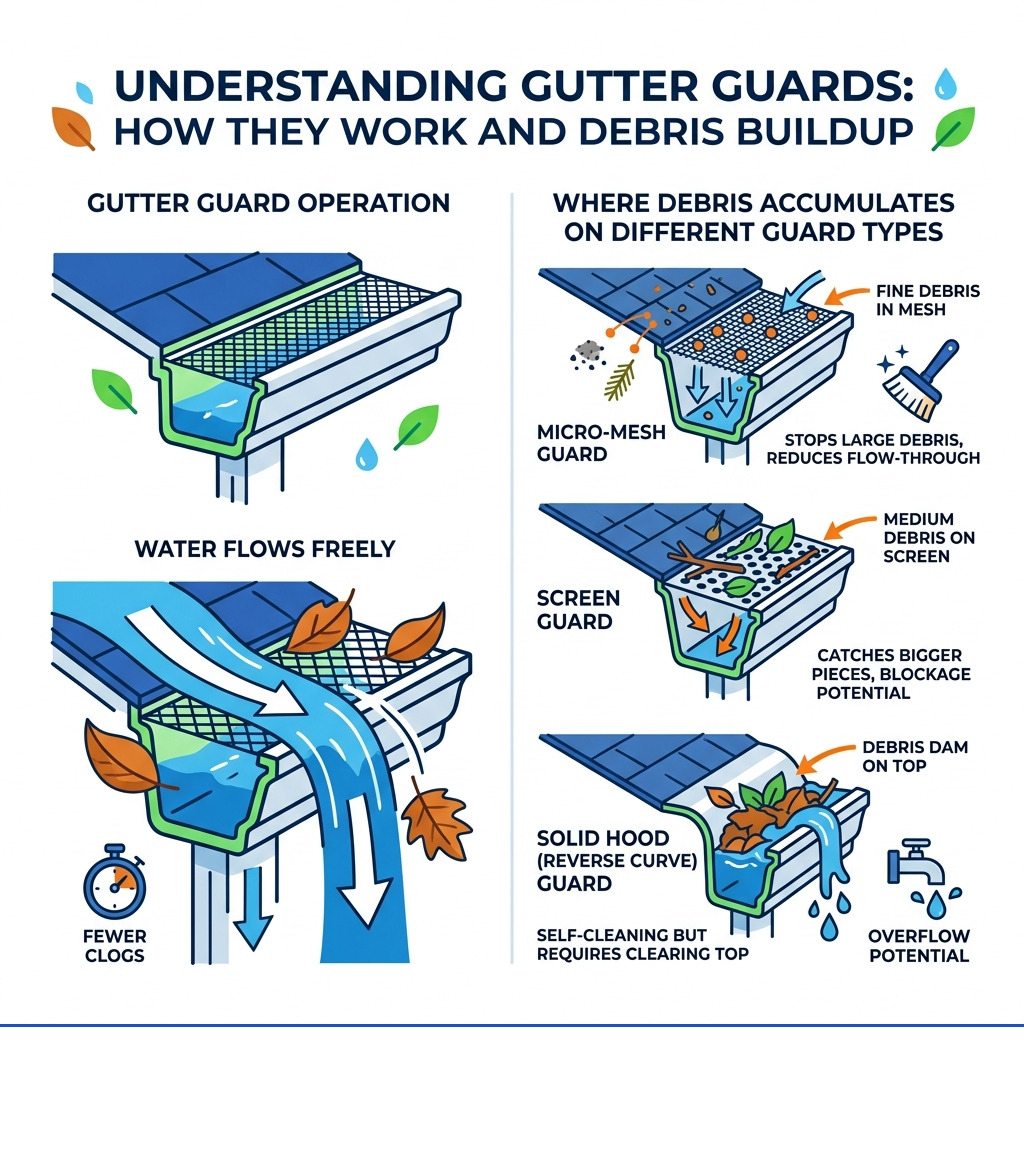
It is a common misconception that once you have a Residential Gutter Installation with high-quality guards, you can simply forget about your roofline forever. While we wish that were the case, the reality is that no system is 100% maintenance-free. Think of Gutter Guards like a high-performance air filter in your car; they do a fantastic job of keeping the “big stuff” out, but eventually, the filter itself needs a quick clear-out to keep the air (or in this case, water) flowing.
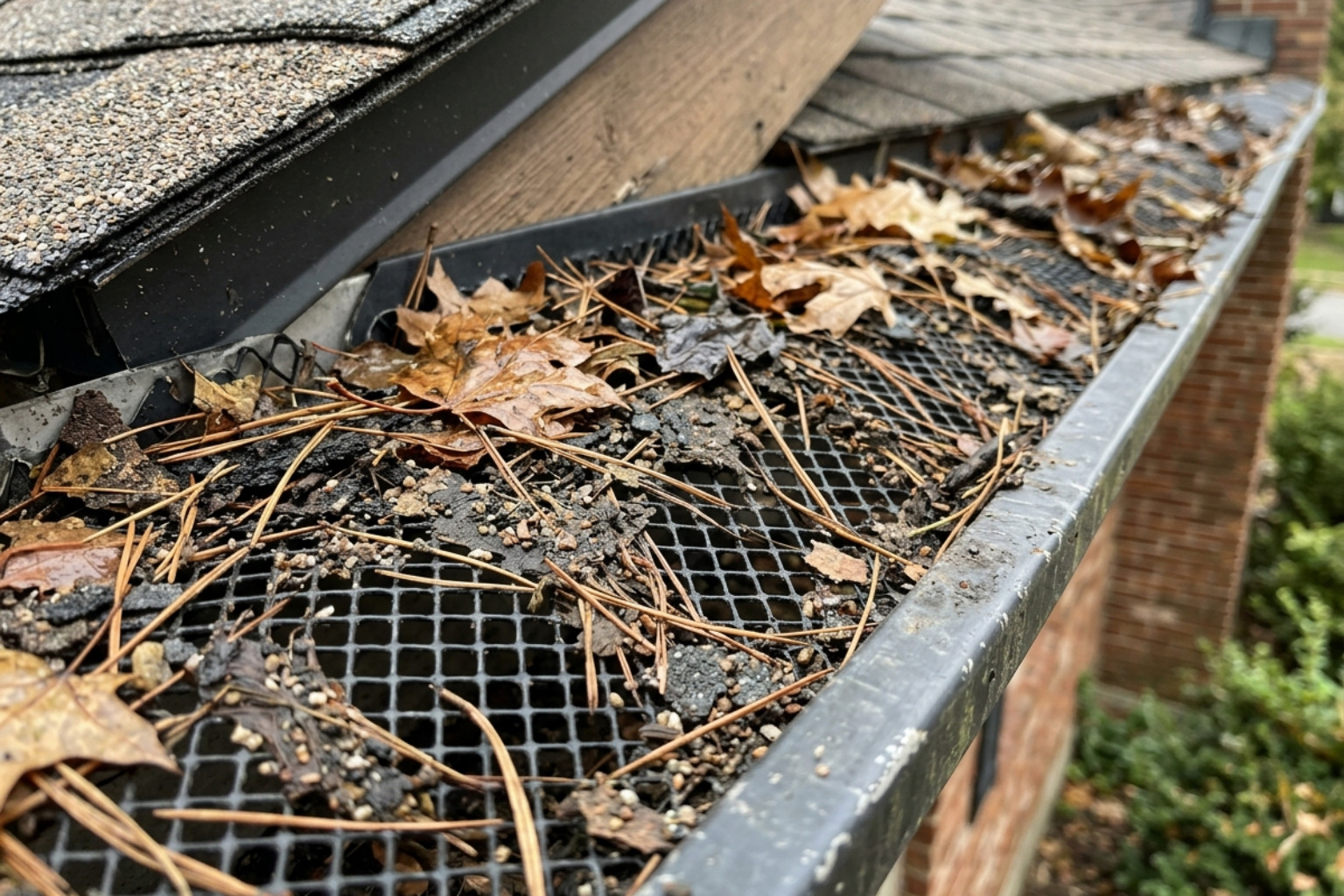
The primary reason cleaning gutters with guards remains necessary is the “fine stuff.” While guards are excellent at deflecting large maple leaves or oak branches, nature is persistent. Several types of debris can still compromise your system:
- Shingle Granules: As asphalt shingles age, they shed small sandy granules. These are heavy and often slip through mesh or settle in the curves of solid guards, creating a sludge-like “gutter mud.”
- Pine Needles: These thin, sharp needles are the nemesis of many guard systems. They can poke through holes or get stuck in the mesh, eventually acting as a dam that catches other debris.
- Pollen and Dust: In the springtime in Central Virginia, everything turns yellow. That pollen combines with dust to create a sticky film on top of your guards, which can reduce water permeability.
- Organic Matter: Seeds, pods, and “helicopters” can get caught in the edges of the guards. If left alone, these can actually begin to sprout, leading to mini-gardens growing out of your roofline.
When these particles accumulate, they prevent water from entering the gutter channel. Instead of flowing safely to your downspouts, the water sheets over the side of the guard. This leads to water pooling near your foundation, which is exactly what the gutters were designed to prevent. Keeping the surface of your guards clear is the best way to ensure your home stays dry and protected.
Identifying Signs of Clogs
How do you know if your guarded system is struggling? You don’t always have to climb a ladder to find out. Here are the red flags we tell our clients in Midlothian and Glen Allen to look for from the ground:
- Water Staining: Look at your siding or the “tiger stripes” on the front of your gutters. If you see dark streaks or mold growth, water is likely overflowing the guards.
- Sagging Gutters: If a section of your gutter looks like it’s pulling away from the house, it might be heavy with wet “gutter mud” or trapped water that can’t reach the downspout.
- Plant Growth: If you see green sprouts or moss peeking over the edge of your guards, you definitely have enough organic buildup inside to support life—which means it’s time for a cleaning.
- Pest Nesting: Birds and squirrels love the “shelf” created by some gutter guards. If you see frequent bird activity or sticks poking out, you might have a nest blocking the flow.
- Soil Erosion: Check the ground directly beneath your gutters after a rainstorm. If you see holes in the dirt or mulch washed away, the water is overshooting the gutters.
- Basement Dampness: If your basement or crawlspace feels more humid than usual, or if you notice new cracks in the foundation, your gutters may not be directing water far enough away from the home.
The Essential Guide to Cleaning Gutters with Guards
Maintaining a guarded system is generally much easier than cleaning open gutters, but it requires a different approach. Instead of “scooping sludge” for hours, the goal of cleaning gutters with guards is usually to clear the surface and ensure the internal channel is free of fine silt.
This regular upkeep is key to Power Wash and Gutter Cleaning for a Happy Home. When the system is efficient, water moves quickly, preventing the stagnant pools that attract mosquitoes and cause wood rot.
How often should you clean gutters with guards?
In the Greater Richmond area, we recommend a bi-annual schedule. However, your specific needs depend on your “tree tax”—how many trees live near your roof.
- Spring (Post-Bloom): Once the oak tassels and pollen have finished falling, give the guards a quick sweep. This ensures they are ready for the heavy summer thunderstorms.
- Fall (Post-Leaf Drop): This is the big one. Even if your guards deflect 95% of the leaves, the remaining 5% can pile up on top, especially in the valleys of your roof.
- Post-Storm Inspections: After a major windstorm or a heavy Virginia snow, it’s worth doing a visual check from the ground to make sure no large branches have dented the guards or blocked the flow.
If you live in a heavily wooded area like parts of Hanover or Goochland, you might need a quick “surface brush” every quarter. If your home is in a newer development with few trees, once a year might suffice.
Step-by-Step Process for Cleaning Gutters with Guards
If you are comfortable on a ladder and want to tackle this yourself, follow this proven process:
- Surface Brushing: Use a soft-bristle brush to sweep away dry leaves and debris from the top of the guards. Do this when it’s dry; wet leaves are much harder to move.
- Guard Removal (If Applicable): Some systems, like brush or foam inserts, need to be pulled out to be cleaned properly. If you have “hinged” or “snap-in” mesh guards, you may only need to open a few sections near the downspouts to check for silt.
- Channel Flushing: Use a garden hose with a spray nozzle. Direct the water through the guard (or into the open channel) toward the downspout. This flushes out the fine shingle grit and dust that has settled at the bottom.
- Debris Disposal: Don’t just wash the debris down the downspout if you can help it. Scoop out the larger “gutter mud” into a bucket to prevent clogs in your underground drains.
- Reinstallation: Ensure all guards are snapped back into place securely. A loose guard is an invitation for a squirrel to move in.
- System Testing: Run the hose at the highest point of the gutter and watch the downspout. If water is flowing freely and quickly, you’ve done a great job.
Maintenance Differences by Guard Type
Not all guards are created equal. The way you maintain them depends heavily on their design.
| Guard Type | Cleaning Method | Pros | Cons |
|---|---|---|---|
| Micro-Mesh | Surface brushing and hose rinsing. | Blocks the smallest debris. | Pollen can “film” over the mesh. |
| Reverse Curve | Cleaning the “nose” or opening with a cloth or brush. | Uses surface tension to drop water in. | Bees and wasps sometimes nest inside. |
| Foam Inserts | Must be removed and “wrung out” or shaken. | Very easy to install. | Can trap fine silt and grow moss. |
| Brush Guards | Must be pulled out and shaken/rinsed. | Inexpensive. | Pine needles get “stuck” in the bristles. |
Tools and Safety Protocols for Homeowners
Safety is the most important part of any exterior maintenance project. We cannot stress this enough: ladder falls cause 500,000 injuries and around 300 deaths each year. Before you even think about cleaning gutters with guards, you must have the right gear.
- Ladder Stabilizers: These “arms” attach to the top of your ladder and rest on the roof, rather than the gutter itself. This prevents you from crushing or scratching your Gutter Guards.
- The Three-Point Contact Rule: Always keep two hands and one foot, or two feet and one hand, on the ladder at all times.
- Personal Protective Equipment (PPE): Wear thick work gloves to protect against sharp metal edges and safety glasses to keep debris out of your eyes when you’re looking upward.
- Soft-Bristle Brushes: Avoid wire brushes or metal scrapers, which can damage the coating on your guards and lead to rust.
- Garden Hose with High-Pressure Nozzle: You don’t need a power washer (which can actually dislodge guards); a standard hose with a good nozzle is usually enough.
For more on why professional safety matters, check out our guide on Residential Gutter Cleaning.
Ladder-Free Cleaning Methods
If the thought of heights makes your stomach flip, there are ways to maintain your system from the safety of the mulch bed.
- Extension Poles: You can attach specialized gutter brushes to telescoping poles that reach up to 20 feet. This is perfect for single-story homes in areas like Short Pump or Mechanicsville.
- Telescoping Wands: These attach to your garden hose and have a “U-bend” at the top, allowing you to blast water into the gutters from the ground.
- Gutter Vacuums: There are vacuum attachments designed to “suck” debris off the top of guards, though these work best when the debris is very dry.
While these tools are great for light maintenance, they don’t allow for a close-up inspection of the guards’ condition. If you have a two-story home or complex rooflines, ground-based tools might not be enough to ensure a thorough clean.
Frequently Asked Questions
Can you clean gutters with guards without a ladder?
Yes, for many homeowners, this is the safest and most efficient way to handle routine maintenance. Using extension poles with brush attachments or high-reach water wands allows you to clear off the “top-side” debris that causes most overflows. However, if the downspouts are clogged or if the guards have been damaged by a storm, a ladder (and likely a professional) will be necessary to fix the underlying issue.
What are common mistakes to avoid when cleaning gutters with guards?
- Using a Pressure Washer: High-pressure water can dent aluminum guards, blow out the mesh, or force water up under your shingles, leading to roof leaks.
- Metal Scrapers: These can scratch the protective finish off your gutters and guards, leading to premature corrosion.
- Overreaching: This is the leading cause of ladder accidents. If you can’t reach a spot comfortably, move the ladder.
- Ignoring the Downspouts: You can have the cleanest guards in Richmond, but if there is a clog at the downspout opening, your system will still fail.
- Improper Reattachment: If you remove guards to clean the channel, make sure they are reinstalled exactly as they were. Gaps as small as half an inch can allow birds or debris to enter.
Should I DIY or hire a professional for guarded gutters?
This depends on two factors: safety and complexity. If you have a single-story ranch home and are comfortable on a step ladder, DIY is a great way to stay involved with your home’s maintenance.
However, we recommend hiring a professional if:
- Your home is two or more stories.
- Your roof is steep or has complex valleys.
- You notice signs of damage, like sagging or rust.
- You want to ensure your warranty remains valid (some manufacturers require professional maintenance).
- You simply don’t have the three or four hours it takes to do a thorough job.
Conclusion
At Alpha Exterior Solutions, we believe that your home should be a source of pride, not a never-ending “to-do” list. Cleaning gutters with guards is a vital part of property maintenance that ensures long-term protection for your foundation, roof, and siding. By following a bi-annual schedule and using the right tools, you can enjoy the peace of mind that comes with a high-functioning gutter system.
Whether you’re in Chesterfield, Henrico, or anywhere in Central Virginia, our team is here to help. We provide award-winning reliability and eco-friendly methods to keep your home looking its best. If you’re tired of the ladder dance or want to upgrade your home’s protection, we’re ready to serve.
Protect your home with professional Gutter Guards and let us handle the heights so you can get back to enjoying your weekend. From holiday lighting to expert gutter services, we are your partners in property excellence.

