


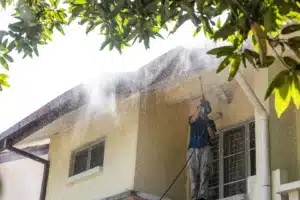


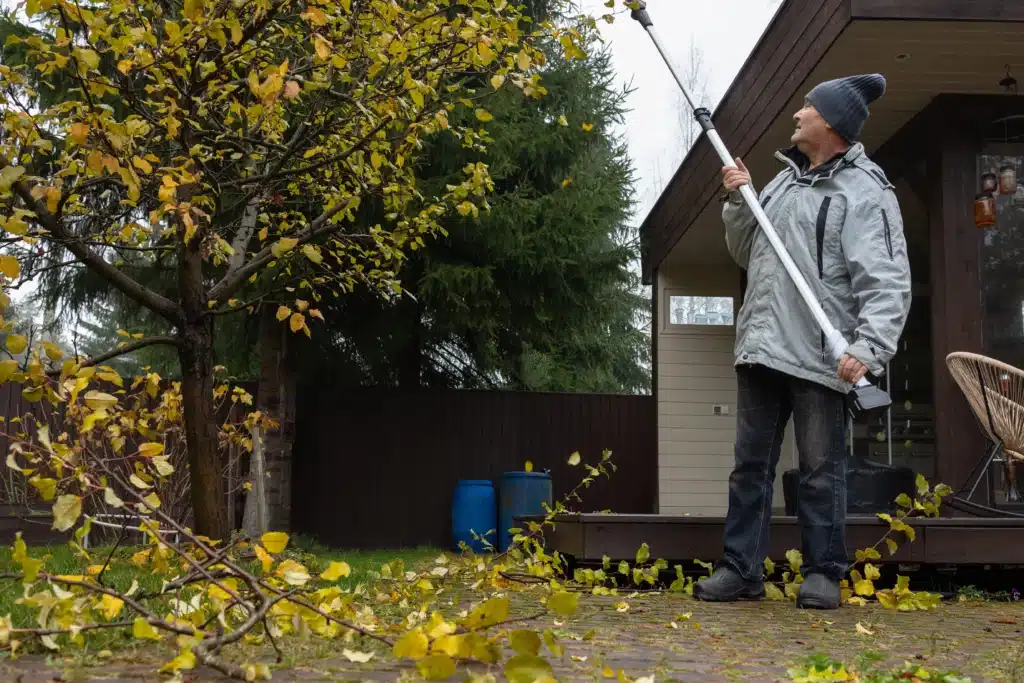
Ground-level gutter cleaning uses a telescoping water-fed pole fitted with a curved nozzle to flush leaves and debris without climbing a ladder. Alpha Exterior Solutions recommends this approach for single-story homes, while taller or heavily clogged gutters may require professional assistance.
Key Takeaways
- Regular gutter cleaning prevents water damage, foundation issues, and structural problems from debris clogs and overflows.
- Cleaning gutters works best when debris has dried for several days after rain stops completely.
- Ground-level cleaning methods eliminate ladder safety hazards while effectively removing gunk from gutters and downspouts.
- Alpha Exterior Solutions’ Richmond, VA team handles gutter maintenance to protect your home’s critical water management systems.

What Tools Do You Need to Start?
A handful of ground-level tools turn gutter maintenance into a manageable task without a ladder in sight. Gutter tongs, extendable gutter scoops, and a leaf blower with a curved attachment all allow homeowners to reach rooflines safely from the yard below. Skipping this equipment and relying on guesswork instead often means missed clogs and water damage that shows up months later. Alpha Exterior Solutions brings years of hands-on experience and commercial-grade equipment to every gutter project. That same ground-level logic applies at a smaller scale for routine homeowner upkeep.
What Tools Work Best for Stubborn Debris?
Packed-in leaves and caked-on grit rarely budge with a simple rinse. A trowel attached to an extension pole breaks up this dense material from the ground. Some homeowners find bare-handed scooping (done carefully, with gloves) works just as well on smaller clogs. Either method loosens debris enough for a hose or pressurized attachment to flush the channel clear.
Beyond basic scooping tools, a few additions make the job more thorough:
- Gutter tongs for grabbing leaves and twigs from a distance
- A leaf blower with a gutter-cleaning nozzle attachment
- An extension pole with a trowel head for compacted debris
- A garden hose with a high-pressure nozzle for final flushing
- Work gloves and safety glasses for general protection
Should Homeowners Also Check for Damage While Cleaning?
Yes. Clearing debris is only part of the job. A proper check includes looking for sagging sections, loose fasteners, and early rust spots while the channel is empty. Noting these issues early, along with simple maintenance habits, extends the lifespan of the entire gutter system and prevents small problems from becoming expensive repairs.
Why Does Ground-Level Gutter Cleaning Matter?
Water backup causes most of the damage homeowners discover too late. Neglected gutters and clogged roof valleys force water to pool against the home, setting the stage for mold growth, wood rot, and structural issues that spread quietly behind siding and soffits. Richmond’s mix of heavy spring rain and dense tree canopy makes this risk constant rather than seasonal.
Clogged gutters rank among the leading causes of water damage in homes throughout the Richmond area. That’s not a minor statistic. It shows how often a small blockage turns into a major repair simply because nobody checked the system regularly. Left alone, clogged gutters and roof valleys lead to serious water intrusion and foundation problems that cost far more to fix than they would have taken to prevent. cite-2
Is climbing a ladder really necessary to clean gutters?
No. Scooping debris by hand from a ladder is a long-standing habit. It carries real safety risks for homeowners who aren’t comfortable working at heights. Falls from ladders send many homeowners to the emergency room every year, and gutter cleaning is a frequent cause. Learning how to clean gutters from the ground removes that risk entirely while still keeping the system clear.
What happens if gutters go uncleaned for too long?
Debris buildup blocks water flow, and the overflow finds the nearest vulnerable surface, usually fascia boards, siding, or the foundation. Over time, that moisture invites mold and rot into materials that are expensive to replace. The following risks grow the longer gutters stay clogged:
- Mold colonies forming inside fascia and soffit areas
- Wood rot weakening roof edges and support structures
- Foundation settling from repeated water pooling
- Pest activity drawn to standing moisture
Regular, ladder-free maintenance keeps these risks from ever taking hold.
How Do You Prepare Your Gutters First?
Proper preparation begins at the downspout, not along the gutter run. Clients who skip this step risk pushing debris deeper into the system, turning a simple task into a stubborn clog. Alpha Exterior Solutions builds every service visit around a sequence designed to keep water buildup and overflow from becoming a problem long before storm season arrives.
The process starts with clearing the opening by hand. Loose leaves, twigs, and granules near the downspout should come out first, along with any downspout strainers in place. Removing this material early prevents it from compacting further down the line, where it becomes far harder to dislodge.
What Should Homeowners Do Before Flushing the Gutters?
Once the downspout area sits clear, attention turns to the channel itself. Hand-clearing loosens the bulk of the debris, setting up the next step: a thorough flush with a garden hose. This confirms water travels the full length of the gutter without pooling or backing up.
Why Does This Order Matter?
Working from the downspout outward keeps loosened debris moving in the right direction, away from the home rather than toward a blockage. A professional-style gutter cleaning approach follows this same logic, prioritizing full clearance over quick surface fixes.
A short preparation sequence looks like this:
- Clear material and strainers directly at the downspout opening.
- Work along the gutter channel, loosening compacted debris by hand.
- Flush the full length with a hose to confirm free water flow.
- Check the downspout exit point for steady drainage.
This groundwork matters because gutters left partially blocked still trap moisture against the fascia and roofline. Expert-level clearing of gutters and downspouts, the kind homeowners rely on for lasting protection, depends on getting these early steps right before any ground-based tools come into play.
How Do You Clean Gutters With a Leaf Blower?
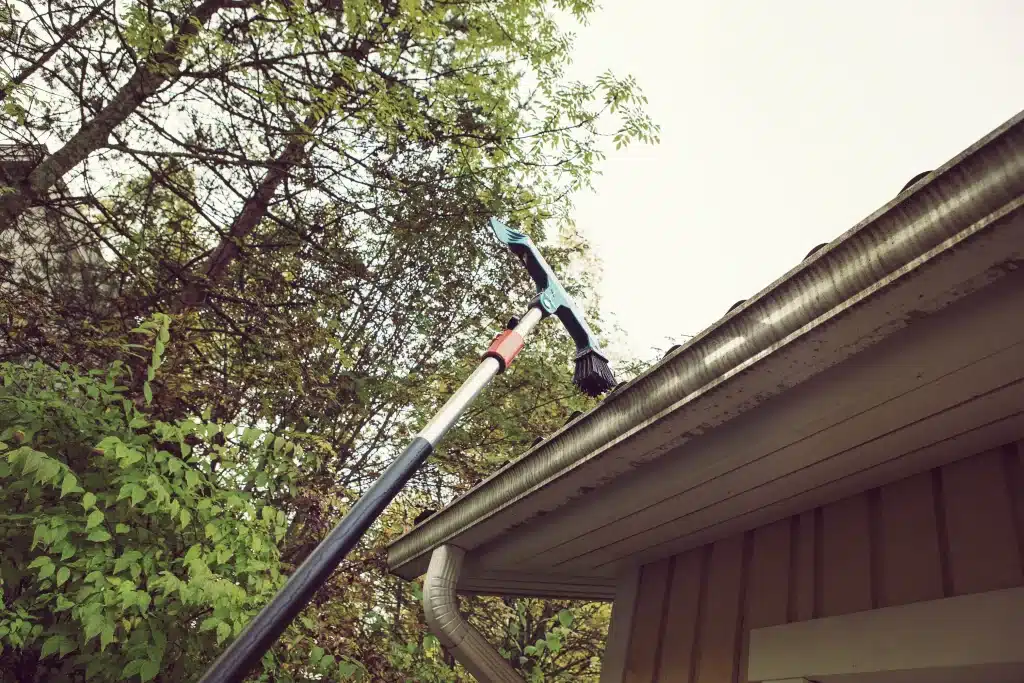
A leaf blower fitted with a gutter attachment is one of the most trusted ways to clear debris without climbing a ladder. The attachment extends the blower’s reach into the channel, pushing leaves and grit out and away from the roofline. Property managers and homeowners favor this approach because it keeps both feet firmly on the ground throughout the job.
Preparation matters before the blower ever turns on. Confirm the attachment locks securely onto the nozzle. Choose a day when debris has dried out; damp leaves clump and resist airflow. With the setup ready, the process follows a simple sequence:
- Attach the extension tube to the leaf blower and inspect the connection for a snug fit.
- Position the tube at the gutter’s starting end, typically opposite the downspout.
- Engage the blower at a steady pace, walking the tube’s angle along the channel.
- Direct debris toward the downspout opening so it exits cleanly rather than scattering onto the roof.
- Clear the downspout opening last, removing any buildup that blocks drainage.
This ground-level clearing process removes leaves, debris, and blockages so rainwater flows freely, protecting the roof, siding, and foundation from avoidable water damage. cite-2
How long does a leaf blower attachment take to clear gutters?
Time varies with gutter length and debris volume, but the method moves faster than hand-scooping from a ladder. Walking the perimeter with a steady airflow typically clears a standard residential run in a single pass per section.
Does a leaf blower work on wet leaves?
Dry debris responds best to airflow, while wet, compacted leaves resist the blower’s force. Waiting for a dry stretch improves results considerably.
As a locally owned company serving Greater Richmond, Alpha Exterior Solutions applies these same dependable standards to every ground-level job, giving homeowners professional-grade results without the ladder risk.
How Do You Use a Wet/Dry Vacuum?
A wet/dry vacuum fitted with a long extension attachment pulls leaves, shingle grit, and standing water out of overhead channels while the operator stays planted on the lawn. It’s one of the most reliable ways for homeowners to clear channels safely without ever climbing a ladder. The vacuum simply reaches up and does the work that hands and scoops once required from height.
Getting results from this method means following a clear sequence rather than guessing at technique. Before starting, confirm the vacuum has a wet-debris setting and attach the curved extension tube designed for overhead reach.
- Inspect the downspout openings and clear any visible blockage first so suction has somewhere to send debris.
- Extend the attachment to the gutter’s edge, keeping both feet firmly on stable ground.
- Work the nozzle slowly along the channel, section by section, rather than rushing the full length at once.
- Pause periodically to check the collection canister and empty it before it chokes the airflow.
- Flush the downspout with a garden hose afterward to confirm water flows freely.
Does a Wet/Dry Vacuum Work on Wet Leaves?
Wet, compacted leaves demand more suction power and more frequent canister checks than dry debris. The attachment still manages the task, but slower passes prevent clogging inside the tube itself.
What If the Gutters Need More Than Clearing?
Cracked seams, sagging sections, or persistent leaks signal a repair need that vacuuming cannot fix. Homeowners facing that kind of damage can pair routine cleaning with seamless gutter installation through Alpha Exterior Solutions. Since gutters exist to divert water away from the house, addressing structural damage protects the foundation just as much as clearing debris does. A dependable routine, built on consistent quality rather than one-time fixes, keeps the entire system protecting the home year after year.
How Does a Garden Hose Clear Debris?
A garden hose directs pressurized water through the gutter channel, flushing loose leaves and grit toward the downspout without requiring anyone to climb a ladder. Nozzle attachments with extension poles reach second-story gutters from solid ground, letting a homeowner inspect water flow in real time. When a gutter channel clogs, water has nowhere to go. It collects and slowly seeps into a home’s exterior, eventually reaching the interior. Flushing debris early with a hose interrupts that slow, costly damage before it starts.
Learning how to clean gutters from the ground safely follows a clear sequence:
- Attach a rigid or telescoping extension wand to the hose nozzle before starting.
- Stand on stable, level ground, well clear of the downspout’s discharge path.
- Aim the nozzle at the gutter’s far end, opposite the downspout.
- Walk the spray slowly toward the downspout, tracing the water’s natural path.
- Pause at corners and seams where debris tends to stack up, flushing each spot fully.
- Finish at the downspout opening to confirm water exits freely and without backup.
Why Does Local Knowledge Matter for Gutter Cleaning?
Richmond’s seasonal mix of oak leaves, pine needles, and heavy spring rainfall fills gutters fast. Alpha Exterior Solutions, based in Richmond, VA, has built firsthand familiarity with these local debris and rainfall patterns over years of service. That knowledge shapes how ground-level cleaning visits get scheduled and performed, rather than relying on guesswork.
Every exterior project, whether restoring a driveway, washing a roof, or clearing a gutter line, gets the same attention to detail. cite-1 That consistency, visit after visit, is what earns a community’s trust.
When Should You Call a Professional Instead?
Steep rooflines, two-story homes, and chronic clogging signal the limits of ground-based tools. Homeowners can handle light debris removal from the ground. Persistent buildup or hard-to-reach sections often call for trained hands and specialized equipment. Waiting too long on these problem areas risks water damage, sagging gutters, and pest activity that a quick DIY pass cannot fully resolve.
Recognition matters here. Alpha Exterior Solutions has been named R•Home Magazine’s Reader Favorite for four consecutive years, a mark of consistency that ground-level methods alone rarely replicate on taller or steeper rooflines. cite-1 That kind of sustained trust comes from technique proven over years of service, not a single lucky season.
Can one company handle multiple gutter problems across a property at once?
Yes. A property with several rooflines or detached structures often needs more than one crew working simultaneously. A 15-person team gives a local provider the hands to manage multiple gutter and roofline projects efficiently, especially when a property exceeds what’s safely reachable from the ground.
What if clogging keeps coming back every season?
Recurring clogs point to a design or debris problem that cleaning alone won’t fix. Professional gutter guard installation is built to work with an existing system, cutting down on future upkeep rather than just treating the symptom repeatedly.
Beyond structural risk, neglected gutters create a pest problem. Leaves and decomposing gunk attract wildlife, including bees, wasps, birds, and rodents looking for shelter near the roofline. Once nesting begins, cleaning becomes a safety issue, not just a maintenance task. At that point, a professional assessment protects both the property and the people trying to clear it.
What Mistakes Should You Avoid Afterward?
The biggest mistake homeowners make after clearing gutters is treating the task as finished for good. Proper gutter maintenance prevents water damage and pest issues that clogged systems invite. A single cleaning session rarely solves the problem long-term. Property managers who skip ongoing upkeep often find themselves repeating the same ladder-free process within months.
Skipping protective covers is one of the most common oversights. Gutter guards prevent leaves, pine needles, and debris from entering the system before buildup starts. Without that barrier, every storm reintroduces the same clogs that prompted the original cleanup.
Do gutter guards really reduce how often cleaning is needed?
Yes. Guards reduce buildup and blockages, which minimizes how often gutters require frequent cleaning services. This protection extends to the roof, siding, and foundation, shielding each from the kind of costly water damage that clogged systems cause over time.
Another frequent error involves viewing gutter guards as optional rather than a proactive investment. Installing them early extends the life of the entire gutter system and cuts down on long-term maintenance demands. Delaying that decision often means repeating ground-level cleanings far more often than necessary.
What should a post-cleaning maintenance checklist include?
A simple checklist keeps small issues from becoming expensive repairs:
- Inspect downspouts for lingering blockages after each cleaning
- Check for sagging sections or loose fasteners
- Consider gutter protection systems to reduce future buildup
- Schedule seasonal follow-ups rather than waiting for visible overflow
Homeowners and property managers who build these habits into their routine protect their investment year after year. Neglecting them, on the other hand, invites the same water damage and structural risks that regular maintenance was designed to prevent in the first place.
FAQ
What tools work best for ground-level gutter cleaning?
Gutter tongs, extendable scoops, a leaf blower with a curved attachment, and a telescoping water-fed pole with a curved nozzle flush debris without a ladder.
When is the best time to clean gutters?
Cleaning works best when debris has dried for several days after rain stops completely, making leaves and grit easier to remove.
Should homeowners inspect gutters for damage while cleaning?
Yes, check for sagging sections, loose fasteners, and early rust spots while the channel is empty to catch small issues before they become costly repairs.
Conclusion
Cleaning gutters from the ground gives homeowners a practical way to maintain their property without the risks that come with ladder work. Follow these proven methods, take the right safety precautions, and you’ll protect your home’s foundation, prevent water damage, and extend the life of your gutters. For homeowners who’d rather leave it to the pros, Alpha Exterior Solutions’ Richmond-area team is ready to handle this essential maintenance with the expertise and equipment to deliver results year after year.

