


How to Remove Moss From a Roof: 4 Proven Methods
What You Need to Know About Cleaning Moss From a Roof
Cleaning moss from a roof is best done using one of four proven methods:
- Manual removal — brush off bulk moss with a soft-bristle brush, working downward
- Soft washing — apply a low-pressure sodium hypochlorite solution to kill moss at the root
- Natural solutions — treat with vinegar or baking soda to alter pH and kill growth
- Commercial moss killers — apply zinc sulfate or potassium salt-based products for lasting results
Always work on a dry roof, protect surrounding plants, and never use a pressure washer on asphalt shingles.
If you’ve spotted a green, spongy layer creeping across your shingles, you’re not dealing with a cosmetic issue. Moss holds up to 20–30 times its own weight in water — and that trapped moisture quietly lifts shingle edges, accelerates wood rot, and shortens the life of your roof.
In the Richmond, VA area, seasonal humidity, shaded lots, and north-facing slopes create ideal conditions for moss to take hold. Left untreated, what starts as a thin green film can work its way under your shingles within months and cause serious structural damage within a year or two.
The good news: with the right method and a few safety precautions, moss removal is manageable — and long-term prevention is straightforward.
As a Richmond-based exterior cleaning company with hands-on experience cleaning moss from a roof across hundreds of residential properties in the area, we have developed a deep understanding of what works. In this guide, we’ll walk you through exactly what works — and what to avoid.
Why Cleaning Moss From a Roof is Essential for Structural Integrity
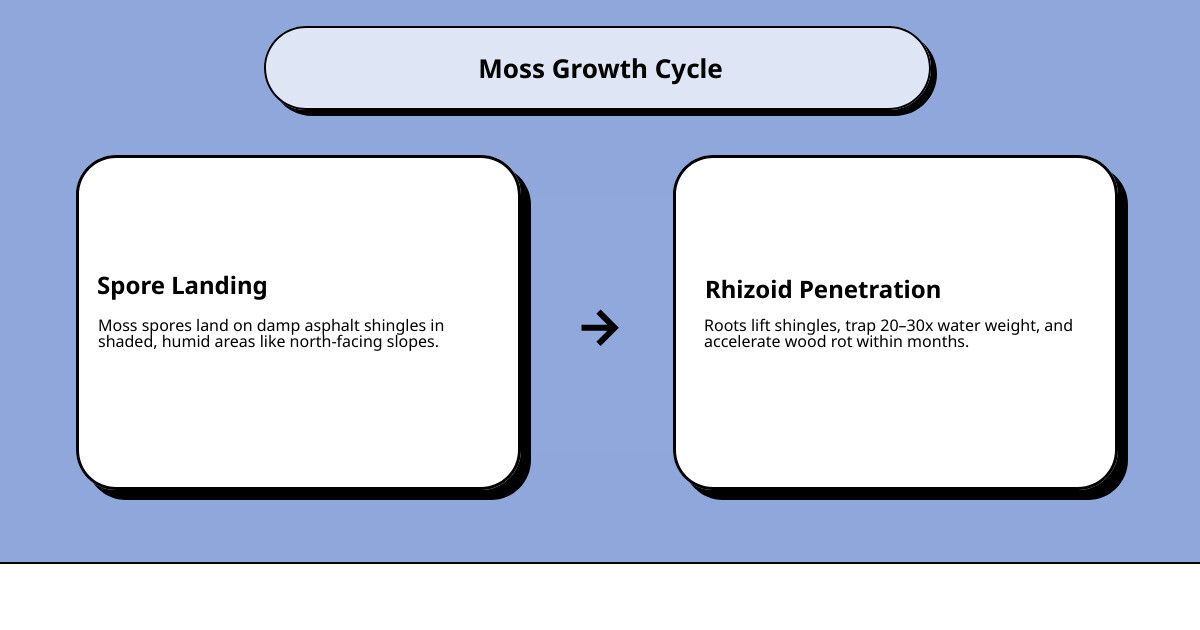
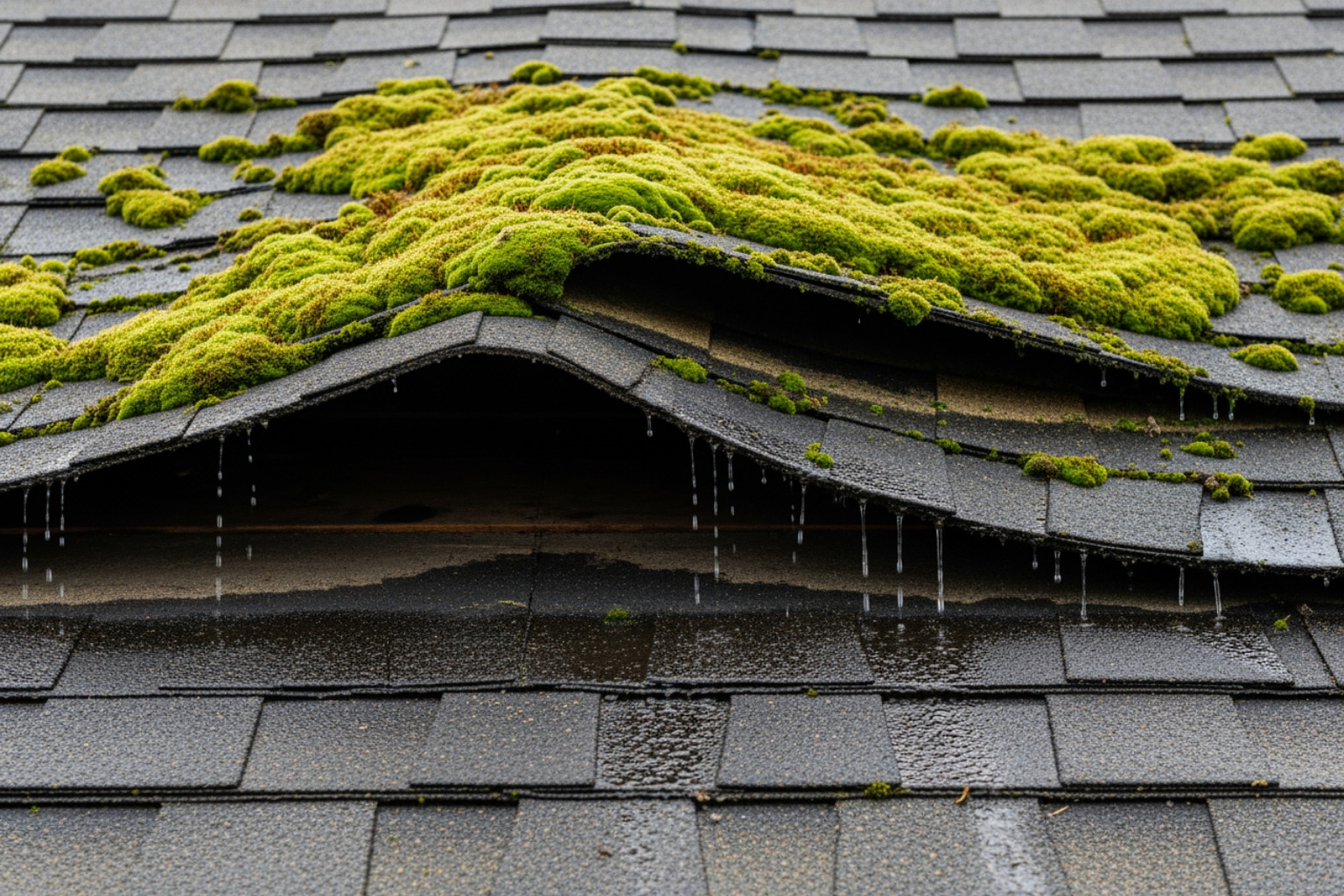
When we talk about cleaning moss from a roof, we aren’t just talking about curb appeal. Moss is a primitive, flowerless plant that thrives by absorbing water directly through its leaves. Because it can hold 20 to 30 times its weight in water, a mossy roof is essentially a giant, heavy sponge sitting on top of your home.
This constant moisture creates a host of structural problems:
- Shingle Lifting: As moss grows, its root-like structures (rhizoids) work their way under the edges of asphalt shingles. This lifts the shingles, making them highly vulnerable to wind damage and allowing water to seep into the roof deck.
- Accelerated Wood Rot: The trapped water prevents the roof surface from drying out. Over time, this moisture migrates to the wooden sheathing and rafters, leading to rot and mold growth.
- Granule Loss: Moss bonds to the protective granules on asphalt shingles. When moss is removed—or when it freezes and thaws—it often takes those granules with it, leaving the underlying asphalt exposed to UV damage.
In regions like Richmond and Chesterfield, we often see moss paired with black streaks. These streaks are usually Gloeocapsa magma, a type of hardy algae. While moss lifts shingles, algae eats away at the limestone filler used in modern shingles. For a deeper look at this double-threat, see our guide on Removing Black Streaks and Moss from Your Richmond Roof.
The Impact of Damp and Shaded Climates
While the Pacific Northwest is famous for its moss, Central Virginia provides a surprisingly perfect habitat. Our coastal humidity and frequent rain create the damp environment moss loves. We find that north-facing slopes are the most frequent victims because they receive the least amount of direct sunlight, staying wet for longer periods after a rainstorm.
Modern asphalt shingles are particularly susceptible because they contain limestone filler, which provides nutrients for organic growth. In damp climates, black streaks can manifest in as little as three years on roofs without specific algae protection. This is why Top Rated Roof Washing in Chesterfield Don’t Let Algae Raise the Roof is a critical part of home maintenance in our area.
Best Time of Year for Cleaning Moss From a Roof
Timing is everything. As of May 2026, the industry standard for roof maintenance suggests two primary windows:
- Late Spring/Early Summer: This is often considered the best time. After the spring rains, moss is in an active growth phase but the approaching heat of summer will make it more brittle and easier to dislodge.
- Early Fall: Cleaning in the fall ensures your roof is clear of debris and moss before the winter freeze-thaw cycles begin, which is when moss does the most damage by expanding under shingles.
Ideally, we look for overcast days with temperatures between 50°F and 75°F. You want a window of at least 48 hours of dry weather following a chemical treatment to allow the solution to reach the roots without being washed away by rain.
Professional Safety Standards and Equipment Preparation
Before we even touch the moss, we have to talk about safety. Falls from roofs are a leading cause of home maintenance injuries. We follow strict OSHA-compliant safety protocols, and we highly recommend homeowners do the same.
Essential Safety Gear:
- Safety Harness and Anchor: If your roof pitch is 6/12 or steeper, a harness is non-negotiable.
- Ladder Stabilizers: These prevent the ladder from sliding sideways and keep it from crushing your gutters.
- Non-slip Footwear: Wear shoes with high-traction rubber soles.
- Eye Protection: Essential when spraying any cleaning solutions.
For more on how we handle these high-stakes environments, visit our Residential Roof Cleaning service page.
Protecting Landscaping and Property
The chemicals used for cleaning moss from a roof can be tough on your lawn and garden. Before starting, we always pre-soak all nearby vegetation with fresh water. This saturates the plants so they are less likely to absorb any chemical runoff.
We also use tarps to cover sensitive plants and ensure that downspouts are routed away from flower beds. After the cleaning is complete, we perform a thorough “final rinse” of all landscaping to dilute any remaining surfactants or salts. This is especially important if you have a koi pond or sensitive aquatic life nearby, as runoff can be harmful to water ecosystems.
4 Proven Methods for Cleaning Moss From a Roof
Not every roof requires the same approach. The following table breaks down the most effective strategies for 2026:
| Method | Best For | Effectiveness | Dwell Time |
|---|---|---|---|
| Manual Agitation | Light, surface-level moss | Moderate | Immediate |
| Soft Washing | Heavy infestations/Algae | Very High | 15–60 Minutes |
| Natural Solutions | Eco-conscious/New growth | Moderate | 2–4 Hours |
| Commercial Killers | Long-term prevention | High | 1–2 Weeks |
Method 1: Manual Agitation and Physical Removal
For roofs with large, “clumpy” moss, physical removal is the first step. However, you must be gentle. We use a soft-bristle brush or a long-handled broom.
The Technique: Always brush in a downward motion. Brushing upward can catch the bottom edge of the shingles, lifting them or tearing the asphalt. Your goal here isn’t to scrub the shingle clean—that would remove the protective granules. Instead, you are just trying to dislodge the bulk of the moss clumps.
Method 2: Professional-Grade Soft Washing for Cleaning Moss From a Roof
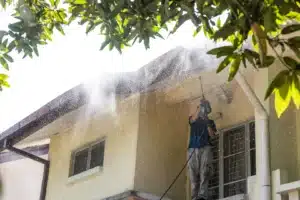
This is our preferred method for achieving a 100% kill rate. Soft washing uses a specialized low-pressure system (usually 40–60 PSI, similar to a garden hose) to apply a cleaning solution, typically a 50/50 mix of sodium hypochlorite and water, mixed with a surfactant to help it “stick.”
Soft washing is the only method recommended by the Asphalt Roofing Manufacturers Association (ARMA). It kills the moss, algae, and lichen at the root without the damage caused by high pressure. For residents in our service area, this is often considered The Best Roof Cleaning Richmond VA Can Offer because it provides immediate results and a deeper clean.
Method 3: Eco-Friendly Vinegar and Natural Solutions
If you prefer to avoid bleach, natural acids can be effective, though they require more patience.
- Vinegar: A solution of white vinegar (or higher-strength industrial vinegar) can kill moss by lowering the pH to a level it cannot survive.
- Baking Soda: Conversely, increasing the pH with a baking soda and water paste can also dehydrate and kill moss over several days.
- Oxygen Bleach: This is a biodegradable alternative to chlorine bleach that is safer for plants but may require multiple applications for heavy moss.
For a detailed breakdown of these alternatives, check out our post on How to Kill Roof Moss for Good.
Method 4: Commercial Moss Killers and Preventative Treatments
There are several highly effective commercial products available in 2026, such as those containing zinc sulfate or potassium salts of fatty acids. These are usually applied via a pump sprayer.
Zinc sulfate is particularly effective in the Richmond area. When applied to the roof, it lingers in the pores of the shingles. Every time it rains, a small amount of the zinc is released, creating an environment where moss spores simply cannot take root.
Long-Term Prevention and Maintenance Strategies
Once you’ve gone through the effort of cleaning moss from a roof, you don’t want to do it again next year. Prevention is significantly more practical than repeated deep cleanings.
- Tree Trimming: Moss needs shade. Trim back any overhanging branches to ensure at least 10 feet of clearance. This allows more sunlight to reach the roof and reduces the amount of organic debris (leaves and needles) that traps moisture.
- Gutter Maintenance: Clogged gutters cause water to back up under the eaves, creating a humid microclimate perfect for moss. Clean your gutters at least twice a year.
- Attic Ventilation: Improving your attic’s airflow reduces the temperature of the roof deck, which can help prevent the “damp heat” that moss and algae love.
Best Practices for Cleaning Moss From a Roof in Damp Climates
In damp climates like Glen Allen or Midlothian, we highly recommend installing zinc or copper strips. These are thin metal strips installed along the ridge of the roof. When it rains, the water reacts with the metal to release ions that are toxic to moss and algae but harmless to your shingles.
- Zinc Strips: Provide roughly 10–20 years of protection.
- Copper Granules: If you are replacing your roof, look for shingles with 3M copper granules (often marketed as “algae-resistant” or Scotchgard protected). These have the preventative power built right into the shingle.
Frequently Asked Questions
Why should pressure washers be avoided on asphalt shingles?
Pressure washers are the enemy of an asphalt roof. The high-pressure stream (often 3,000+ PSI) blasts away the ceramic granules that protect the asphalt from the sun. This doesn’t just shorten the life of the roof; it can cause immediate leaks by forcing water under the shingles and through the underlayment.
How does moss differ from algae and lichen?
- Algae: Appears as flat, black vertical streaks. It doesn’t have roots and is mostly a cosmetic and heat-absorption issue.
- Moss: Spongy, green clumps that have “roots” (rhizoids) which lift shingles and hold massive amounts of water.
- Lichen: A combination of algae and fungus that appears as crusty, leaf-like patches. Lichen is incredibly difficult to remove because it bonds aggressively to the shingle granules.
When is professional intervention required for moss removal?
You should call a professional if:
- Your roof pitch is steeper than 6/12 (a 26-degree angle).
- Moss covers more than 30% of the roof surface.
- The shingles are more than 15 years old (they become brittle and easily damaged).
- You see any signs of interior water damage or soft spots on the roof deck.
Conclusion
Cleaning moss from a roof is one of the most important maintenance tasks for any homeowner in Central Virginia. Whether you live in Henrico, Mechanicsville, or Powhatan, the local climate demands a proactive approach to prevent structural rot and premature roof replacement.
We specialize in the technical expertise required to handle these jobs safely. Our soft wash systems ensure a deep clean without the risk of shingle damage, helping your roof reach its full intended lifespan. If you’re ready to clear the green and protect your investment, visit our Residential Roof Cleaning page to learn more about how we can help.

