



Synthetic Success: A Guide to Cleaning Artificial Grass Tennis Courts
Why Cleaning Artificial Grass Tennis Courts Matters for Safety and Performance
Cleaning artificial grass tennis courts is essential to keep the surface safe, playable, and long-lasting. Here’s a quick overview of what it involves:
- Remove debris regularly – Use a leaf blower, soft broom, or drag mat to clear leaves, dirt, and litter.
- Rinse the surface – Hose down the court to flush out fine particles and prevent buildup.
- Brush the fibers – Use a stiff-bristle brush in multiple directions to lift flattened fibers and redistribute infill.
- Treat moss and algae – Apply a biocidal or enzyme-based cleaner to kill organic growth.
- Inspect and top up infill – Check sand levels every 6-12 months and replenish as needed.
- Schedule a professional deep clean – At minimum once a year to extract contaminated infill and restore drainage.
Artificial grass tennis courts look low-maintenance from the outside. But underneath the surface, compacted infill, embedded organic matter, and hidden moss growth can quietly shorten the life of the court and create real safety hazards.
Consider this: one poorly maintained court was found to have moss growing 25mm deep across most of its surface. Another neglected pitch had a contamination ratio of over 70% – a problem that could have been avoided with a consistent cleaning routine.
Regular upkeep isn’t just about appearances. It protects players and preserves performance over the long run.
I’m James Kastelein, and my background in professional exterior cleaning – including hands-on experience cleaning artificial grass tennis courts – gives me a practical understanding of what it takes to maintain these surfaces the right way. In this guide, I’ll walk you through everything you need to know, from basic weekly routines to advanced seasonal care.
Why Cleaning Artificial Grass Tennis Courts is Essential
When we talk about cleaning artificial grass tennis courts, we aren’t just talking about making them look pretty for the neighbors in Midlothian or Chesterfield. We are talking about the structural integrity and playability of the surface.
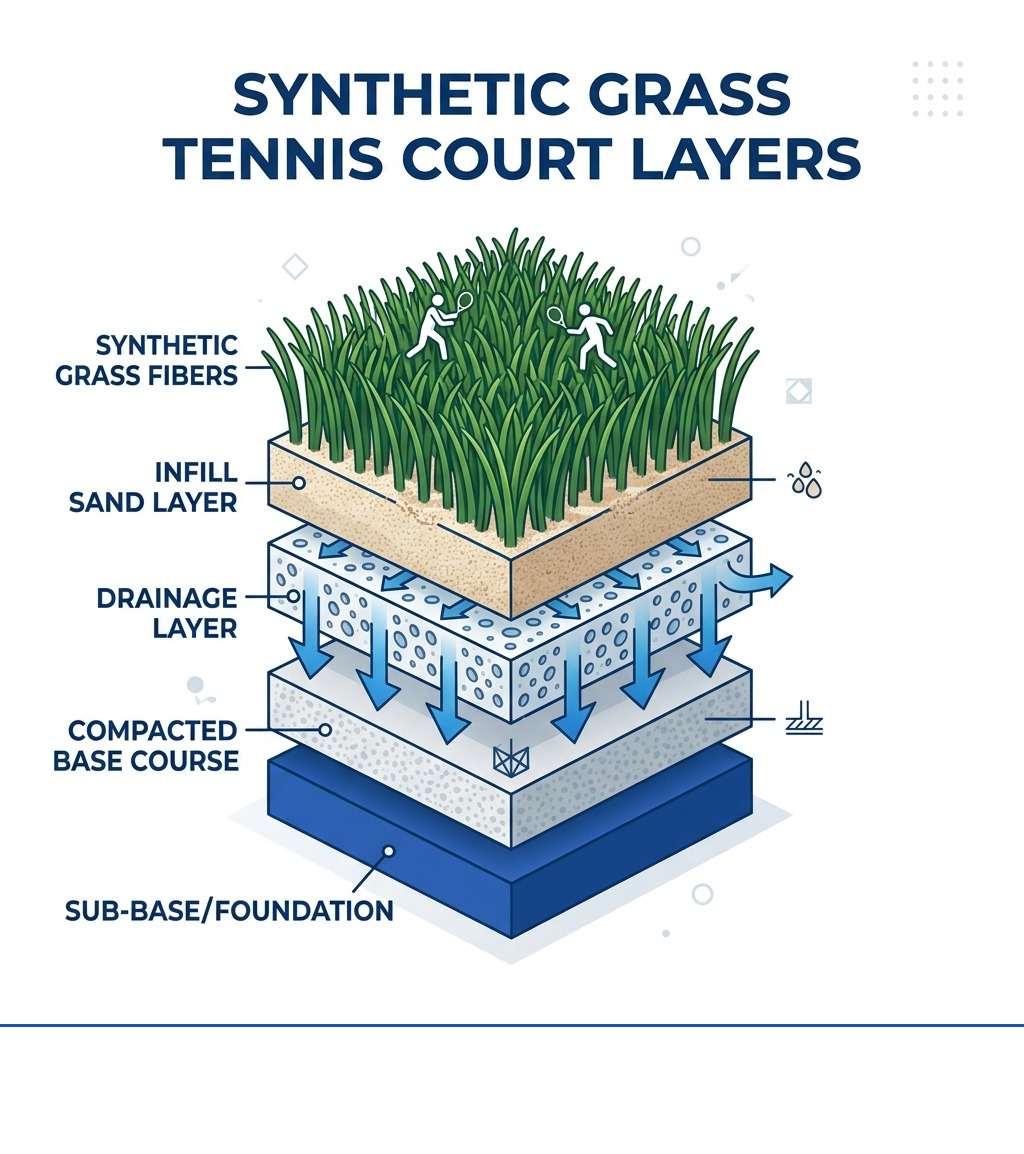
One of the most critical factors is surface permeability. Synthetic courts are designed to drain water quickly through the infill and the backing. However, as organic debris like pollen, dust, and leaf mulch builds up, it forms a “seal” or a crust. This prevents water from escaping, leading to standing water and a slippery, dangerous court.
Fiber resilience is another major concern. The “grass” blades need to stay upright to support the ball and provide a consistent bounce. When dirt and grit accumulate at the base of these fibers, they act like sandpaper, grinding down the synthetic blades every time a player moves. Regular cleaning keeps these fibers standing tall and prevents premature wear.
Furthermore, a dirty court is a breeding ground for bacteria, moss, and algae. In the humid climate of Central Virginia—from Glen Allen down to the Tri-Cities—algae can turn a court into an ice rink in just one damp season. Don’t Let Grime Ruin Your Game with Commercial Tennis Court Cleaning explains how these biofilms not only look unappealing but significantly increase the risk of slips and falls.
Lastly, consistent maintenance helps you avoid “wand scars.” This happens when an inexperienced person tries to use a high-pressure washer too close to the surface, permanently damaging the synthetic fibers. By following a regular cleaning schedule, we ensure the court stays in peak condition without needing aggressive, risky interventions.
Essential Tools and Equipment for Maintenance
To do the job right, you need the right gear. While you can do a lot with a simple broom, specialized tools make cleaning artificial grass tennis courts much more efficient.
- Drag Mats and Cleansweep Tools: A 2-meter wide drag mat or specialized tool is a game-changer. These tools are designed to lift debris like leaves and twigs while allowing the heavy sand infill to fall back through the mesh onto the court. You can cover an entire court in just 8 or 9 passes, usually taking less than 10 minutes.
- Leaf Blowers: Essential for daily or weekly debris removal. It’s the fastest way to clear dry leaves and prevent them from breaking down into the “mud” that clogs drainage.
- Soft-Bristle Brooms and Turf Brushes: We recommend synthetic bristle brushes. Metal rakes or stiff wire brushes should never be used, as they can tear the carpet backing or pull out the fibers.
- Low-Pressure Sprayers: For applying biocidal treatments or mild detergents, a knapsack sprayer or a specialized low-pressure system is ideal. This ensures even coverage without the risk of high-pressure damage.
- Shoe Brush Trays: Prevention is the best tool. Installing these at every entrance to the court helps prevent players from tracking in mud and organic matter from the surrounding landscape.
Comparison of Maintenance Equipment
| Tool | Usage | Benefit |
|---|---|---|
| Leaf Blower | Daily/Weekly | Fast removal of loose debris; prevents organic buildup. |
| Drag Mat | Weekly | Levels infill and collects larger litter/leaves. |
| Turf Brush | Monthly | Lifts flattened fibers and redistributes sand. |
| Low-Pressure Sprayer | Bi-annually | Applies cleaners/sanitizers safely. |
| Professional Power Brush | Annually | Deep cleans and decompresses the base layer. |
The Step-by-Step Process for Routine Cleaning
Routine maintenance doesn’t have to be a chore if you stay on top of it. Here is the process we recommend for keeping your court in top shape throughout the year in areas like Henrico and Goochland.
- Debris Removal: Start by using your leaf blower or drag mat to clear the surface. Work from the center out toward the edges. Pay special attention to the corners, where wind often deposits piles of organic matter.
- Surface Rinsing: If the court looks dusty or if there’s been a lot of pollen (common in Ashland and Hanover), a light rinse with a garden hose can help flush fine particles through the drainage holes.
- Spot Treatment: Check for bird droppings, food spills, or pet waste. These should be cleaned immediately to prevent staining and bacteria growth.
- Fiber Lifting: Once the court is clear of debris, use your turf brush to lift the fibers. Brush against the grain to ensure the blades stand upright.
- Professional Soft Wash: For a deeper refresh that kills spores without damaging the turf, consider Commercial Tennis Court Soft Washing. This method uses eco-friendly solutions to sanitize the entire area.
Managing Infill and Brushing for Cleaning Artificial Grass Tennis Courts
Infill is the “soul” of an artificial grass court. Usually made of kiln-dried silica sand, it provides the weight to keep the carpet in place and the “give” for a player’s joints. However, play patterns—especially heavy activity at the baselines—cause the sand to shift and compact.
Compaction relief is vital. If the sand becomes a hard, solid mass, the court loses its cushioning and drainage. We recommend multi-directional brushing at least once a month. By brushing in different directions (north-south, then east-west), you redistribute the sand evenly and prevent it from “packing down” in high-traffic zones.
If you notice the tips of the green fibers are exposed more than usual, it’s time for a top-up. Most manufacturers recommend checking infill levels every 6 to 12 months.
Removing Organic Debris and Stains
In the wooded areas of Powhatan or Manakin Sabot, leaf litter is a constant battle. If leaves are left to rot, they turn into a nutrient-rich compost that moss absolutely loves.
For stains like bird droppings or spilled sports drinks, immediate action is best. Blot the liquid with a clean cloth—never rub, as this can push the stain deeper into the fibers. We suggest using a pH-neutral detergent or a simple mixture of white vinegar and water. For pet waste, use an enzyme-based cleaner specifically designed for synthetic turf to break down odors and bacteria at the molecular level.
Advanced Maintenance: Moss, Algae, and Deep Cleaning
Even with the best routine, nature eventually finds a way in. Moss and algae are the primary enemies of synthetic courts in Central Virginia. They often start in the shaded areas under overhanging branches or along the northern edge of the court.
Once moss takes hold, it acts like a sponge, keeping the court permanently damp. This accelerates the growth of more moss, creating a vicious cycle. To combat this, we use biocidal treatments that kill the spores at the root.
Winter brings its own set of challenges. Snow-melt cycles can push fine silt and debris deeper into the infill. When the water freezes and thaws, it can cause the infill to compact even further. A spring deep clean is non-negotiable for courts in Richmond and Tuckahoe to clear out this winter “sludge.”
Professional Standards for Cleaning Artificial Grass Tennis Courts
While DIY maintenance is great for the week-to-week, professional deep cleaning is where the real “rejuvenation” happens. Professional services use specialized equipment that can perform “deep extraction.” This involves lifting the top layer of infill, filtering out the contaminants (dust, hair, skin cells, broken-down fibers), and returning the clean sand to the court.
We also perform detailed seam inspections. Over time, the adhesive holding the carpet sections together can weaken. Catching a loose seam early prevents it from becoming a trip hazard or a place where weeds can take root. Professional sanitizing treatments also include high-grade enzymes that provide long-lasting protection against bacteria, which is especially important for high-traffic school or club courts.
Seasonal Maintenance and High-Traffic Care
For facilities like schools or tennis clubs in Short Pump and Mechanicsville, the maintenance schedule needs to be more aggressive. High-traffic courts experience faster infill displacement and fiber flattening.
- Daily: Quick walk-through to remove large litter and check for hazards.
- Weekly: Full debris removal with a leaf blower or drag mat.
- Monthly: Intensive brushing and infill check.
- Annually: Professional deep clean and biocidal treatment.
Trimming overhanging branches is a simple but effective seasonal task. Reducing the amount of shade and the volume of falling leaves will significantly reduce your moss and algae problems.
The Do’s and Don’ts of Synthetic Court Care
To keep your court in “grand slam” condition, follow these simple rules:
The Do’s:
- Do wear non-marking tennis shoes. Heavy treads or spikes can tear the fibers.
- Do clean up spills immediately.
- Do use a weed barrier during installation or maintain the perimeter to prevent encroachment.
- Do check your drainage outlets regularly to ensure they aren’t blocked by mulch or soil.
- Do brush the court in multiple directions to keep the surface level.
The Don’ts:
- Don’t use harsh chemicals like bleach or caustic cleaners, which can discolor the “grass.”
- Don’t use metal tools (rakes, shovels) on the surface.
- Don’t allow vehicles or heavy machinery on the court without protective mats.
- Don’t ignore small moss patches; they spread faster than you think.
- Don’t refuel power tools (like leaf blowers) on the court surface, as petroleum leaks can melt the synthetic fibers.
Frequently Asked Questions about Synthetic Court Maintenance
How often should I clean my artificial grass tennis court?
For a private residential court in Bon Air or Moseley, a weekly debris sweep and a monthly brushing are usually sufficient. A good rule of thumb is to brush the court after every 10 to 20 hours of play. A professional deep clean should be scheduled at least once a year, or twice if the court is surrounded by heavy tree cover.
Is pressure washing safe for cleaning artificial grass tennis courts?
It can be, but only if done correctly. High pressure can blast the infill right out of the carpet and damage the fibers. We prefer “Soft Washing,” which relies on specialized cleaning solutions and low pressure to achieve a better, safer result. If you do use a pressure washer, keep it on a low setting and maintain a safe distance from the surface.
How do I identify compaction or drainage issues?
Look for “ponding”—areas where water sits for more than 20 minutes after a rainstorm. Another sign is a “hard” feel underfoot or a ball that bounces inconsistently or too high. If you see a green or dark film on the surface, that’s a clear indicator that silt has accumulated and is trapping moisture.
Conclusion
A well-maintained artificial grass tennis court is a fantastic asset for any property in Central Virginia. Whether you are in the heart of Richmond or out in the quiet reaches of Goochland, keeping your court clean ensures it remains a safe, high-performance space for years to come.
We pride ourselves on reliability and eco-friendly methods. We understand the specific needs of property owners in our region, and we are here to help you protect your court. From routine soft washing to deep sanitizing, we have the expertise to keep your court in peak condition.
Don’t let a neglected court ruin your game. For expert assistance and to ensure your court remains a reliable, high-performance surface for the future, learn more about our Commercial Tennis Court Soft Washing services today. Proper care today means more time playing tomorrow!

