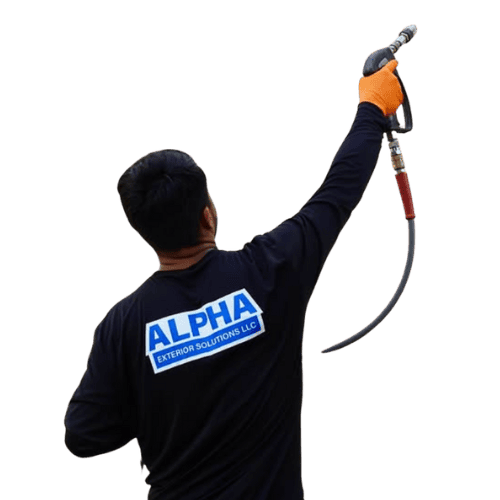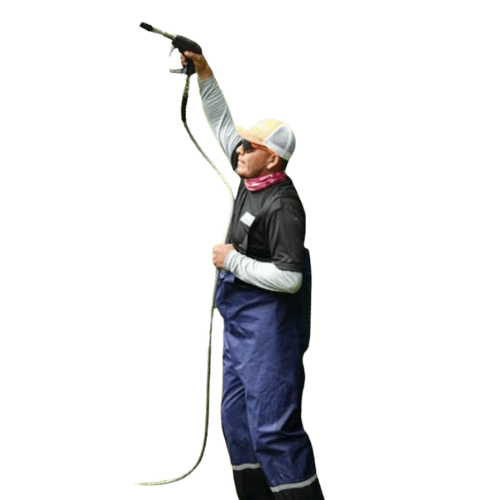



Pressure washing a house comes down to using the right PSI setting and a wide spray pattern so the siding stays intact. Before the water ever turns on, homeowners should scrub the exterior, cover nearby plants and fixtures, and gear up with the right protective equipment. Alpha Exterior Solutions brings commercial-grade equipment and eco-friendly solutions to every job, removing built-up grime without the water intrusion or paint chipping that come from rushing the process.
Key Takeaways
- Pressure washing requires the right PSI setting and a wide spray pattern to avoid damaging siding.
- Homeowners must scrub the exterior first and cover light fixtures, plants, and air conditioning units.
- Protective eye gear and gloves prevent injury from flying debris, ricocheted water, and chemical agents.
- The wand must stay at least 6 feet away from electrical wires during the entire wash.
What do you need before pressure washing?
Taking the time to prepare properly before pressure washing is what keeps the project free of property damage and injury. How to pressure wash a house starts well before the trigger gets pulled, with gathering the right protective gear and safeguarding the vulnerable surfaces around the home.
Safety equipment comes first, and for good reason. Nationwide recommends putting on protective eye gear and gloves before starting any pressure washing project, since flying debris, ricocheted water, and chemical cleaning agents can all reach unprotected skin and eyes in an instant. Skipping this step is how an easily preventable injury happens in the first minute of the job.
What safety precautions should homeowners take before pressure washing?
Securing the work area means covering light fixtures, air conditioners, plants, and shrubs before starting. A pressure washer’s force can shred delicate foliage and push water into electrical components, raising the risk of shock or fire, which is why Nationwide stresses protecting these items before pulling the trigger.
Ladders have no place in pressure washing. The recoil from a pressurized spray can throw someone off balance in an instant, which is why Nationwide warns against climbing a ladder for this task altogether; the fall risk simply isn’t worth it. Extension wands give homeowners the reach they need without giving up stable footing.
What equipment do professionals use for safe pressure washing?
Hiring a professional service takes these preparation burdens off a homeowner’s plate entirely. Alpha Exterior Solutions brings commercial-grade equipment and eco-friendly cleaning solutions to every project, and the company’s low-pressure power washing approach protects surfaces while still clearing away dirt, mold, and algae effectively.
A complete preparation checklist includes these items:
- Protective eye gear and gloves
- Tarps or plastic sheeting for light fixtures and outlets
- Coverings for plants, shrubs, and air conditioning units
- Extension wands rated for the pressure washer output
- Cleaning solutions appropriate for the siding material
Skipping any of these steps risks water intrusion behind the siding, stripped paint, or personal injury. A little methodical preparation is what turns pressure washing from a risky chore into routine maintenance that helps a home’s exterior last longer.
Weather plays just as big a role in the outcome as the equipment does. Overcast days with mild temperatures give cleaning solutions time to break down dirt and mildew before they dry on the surface, while direct sun can bake a solution in place and leave streaks behind. Homeowners should also confirm that an outdoor spigot delivers steady water flow and pressure, since a weak water supply starves the pump and drags down cleaning performance no matter how the machine is rated. A quick test of the spray pattern on a small, inconspicuous section of siding before washing the whole house catches nozzle or pressure issues early, before they show up somewhere visible.

How do you choose the right pressure washer?
Matching a pressure washer’s specs to the siding material is what keeps a cleaning job from turning into a repair job. A vinyl-sided home can handle a powerful gas unit rated at 2,500 to 3,000 PSI, while softer surfaces need far less force. Get the match wrong, and the result is stripped paint, gouged wood, or water forced behind the siding where rot can start unseen.
First-time buyers often don’t realize how dramatically surface requirements can differ. The Home Depot’s 2023 pressure washing guide confirms vinyl siding holds up to a powerful gas pressure washer in that 2,500 to 3,000 PSI range, but push those same pressure levels against a stucco wall and the surface can erode within minutes.
What PSI rating works best for different siding types?
Surface hardness sets the safe operating range. Stucco, aluminum, and soft-grain wood homes call for low-pressure soft washing rather than pressure washing at higher PSI ratings, since going above these thresholds risks permanent etching and water working its way behind the siding.
Choosing the right equipment starts with assessing the surface, not the machine. Alpha Exterior Solutions technicians evaluate substrate condition before dialing in any settings, following the simple industry rule of using the lowest PSI and widest spray pattern that still gets the job done. Clean results never require maximum force.
Are gas or electric pressure washers safer for house washing?
Gas-powered units deliver higher PSI, which suits tough vinyl and concrete surfaces well. Electric models produce lower, more controllable pressure that protects delicate exteriors like stucco and soft-grain wood from accidental gouging. Professionals often rely on gas washers with adjustable regulators, dialing the output down for sensitive areas while keeping enough power for the tougher ones.
Selecting the right washer starts with identifying the siding material, then matching it to a machine rated within safe limits. Surfaces cleaned at the proper pressure last noticeably longer, while surfaces blasted above their tolerance tend to fail early, bringing repair headaches no homeowner wants to deal with.
How does nozzle selection affect the final result?
PSI rating only tells part of the story. The spray tip attached to the wand decides how concentrated that pressure becomes once it hits the surface. A narrow 0-degree or 15-degree tip squeezes the force into a tight stream that can etch wood or crack stucco, even on a machine with a moderate PSI rating, while a wider 25-degree or 40-degree tip spreads that same pressure across a broader area. That’s why most house-washing work calls for the widest tip that still clears the grime effectively. Holding the wand farther from the surface and keeping it moving steadily further cuts the risk of leaving visible lines or damage behind.
Routine equipment maintenance matters just as much as picking the right machine in the first place. A clogged nozzle, a worn pump seal, or a kinked hose can cause pressure spikes or inconsistent output mid-wash, throwing off even the correct settings. Alpha Exterior Solutions keeps its commercial-grade equipment on a regular maintenance schedule, so every project runs at the calibrated pressure the surface needs, start to finish.

What are the steps to pressure wash safely?
Safe pressure washing follows a clear sequence: preparation, technique, and post-wash care. Skip any step along the way, and the risk is water intrusion, siding damage, or personal injury, which is why the process really begins well before the sprayer ever turns on.
What preparation is required before pressure washing?
Preparation is what prevents the costly mistakes. Homeowners should scrub the exterior first to loosen dirt, debris, or mildew, as Nationwide’s pressure washing guide recommends, since that manual agitation breaks the bond between contaminants and siding before the water ever hits. Covering light fixtures, air conditioners, and nearby plants keeps them safe from the force of the spray.
How to pressure wash a house safely also means paying close attention to electrical hazards. The wand needs to stay a safe distance from electrical wires for the entire wash, since water and electricity are a dangerous combination, and even a brief lapse in that distance can lead to a serious outcome.
What technique prevents water damage during washing?
Water intrusion destroys walls from the inside out, which is why the pressure washer should never be pointed into any gaps or cracks in the home’s exterior. Nationwide’s guidance is firm on this rule because forced water can penetrate sheathing and insulation quickly. Spraying should always angle downward and away from openings.
Alpha Exterior Solutions uses advanced power washing techniques to lift deep-set stains, mildew, and debris without causing damage along the way. The company’s approach always matches the surface to the correct pressure level: delicate substrates get a soft wash, while tough grime on durable siding gets higher pressure applied with precise control.
Working in overlapping horizontal passes, moving steadily from top to bottom, produces the most even result. Starting at the top also lets rinse water carry loosened dirt down over sections that haven’t been cleaned yet, instead of redepositing grime on a section that’s already freshly washed.
What surfaces require special care?
Different materials hold up to different pressures. Vinyl siding can take a powerful gas pressure washer rated at 2,500 to 3,000 PSI, while stucco, aluminum, and soft-grain wood need gentler treatment, typically around 1,200 to 1,500 PSI. The wrong setting strips paint, gouges wood, and cracks stucco, so the lowest effective PSI paired with the widest spray pattern is always the safer route to a clean result.
What happens after the washing is complete?
The work isn’t finished the moment the last section gets rinsed. A thorough final rinse clears away any residual cleaning solution, since leftover residue can attract dirt faster or leave a dull film once it dries. Windows, door frames, and outdoor light fixtures also benefit from a quick wipe-down to clear any overspray before it has a chance to dry in place.
Homeowners should also walk the property afterward, checking for spots that need a second pass, watching for water that may have pooled against the foundation, and making sure covered plants, fixtures, and outlets are uncovered and back to normal. Letting the siding air dry fully, rather than closing up outdoor vents or fixtures right away, helps keep trapped moisture from becoming a problem down the road.
When should you use soft washing instead?
Soft washing is suited to delicate exterior surfaces where high-pressure water does more harm than good. Roofs, painted siding, stucco, and older wood all benefit from this low-pressure cleaning method, and Alpha Exterior Solutions recommends it whenever surface integrity matters more than raw force.
Dirt, algae, mold, and other contaminants chip away at curb appeal and cause damage over time, and on fragile materials, a high-pressure blast only speeds up that deterioration. Soft washing clears the buildup without stripping paint, cracking shingles, or forcing water behind the siding.
What surfaces require soft washing?
- Roofs with asphalt shingles or aging materials
- Painted siding where pressure lifts and peels the finish
- Stucco exteriors prone to cracking under force
- Older wood decks and fences with softened grain
Soft washing is a low-pressure clean built for delicate surfaces like roofs and painted siding, applying eco-friendly cleaning solutions that break down organic growth at the source. Alpha Exterior Solutions tailors its approach to each property, choosing between a gentle soft wash or a high-pressure clean based on what will get the best results.
How does soft washing actually clean without high pressure?
Soft washing relies on chemistry rather than force. A specially formulated cleaning solution, typically applied at low pressure through a wide nozzle, breaks down algae, mold, mildew, and grime at the root instead of blasting it off the surface. The solution dwells for a short period so it can work into the organic growth, then a gentle low-pressure rinse carries the loosened contaminants away. Because the cleaning happens chemically, the surface underneath, whether that’s aging shingles, painted trim, or soft-grain wood, never takes on the mechanical stress a high-pressure stream would bring.
That’s also why soft washing tends to keep surfaces cleaner for longer. The solution kills algae and mold spores at the surface level instead of only removing what’s visible, which slows down the regrowth that often follows a purely mechanical pressure wash.
How do you know if your home needs soft washing instead of pressure washing?
Start by checking the surface material. A brick home can tolerate pressure between 1,500 and 2,000 PSI with a 25-degree spray tip, but painted wood or stucco cannot. When paint already shows cracks, chalkiness, or peeling, soft washing is what keeps that damage from getting worse.
Homeowners who aren’t sure about their surface’s tolerance should consult residential soft washing guidance before proceeding, since the wrong method can turn a simple cleaning task into a repair project. Alpha Exterior Solutions evaluates each surface individually and selects the pressure level that will hold up over time.
How often should you pressure wash your house?
A house generally does best with a pressure wash once or twice a year. Keeping to that schedule keeps grime, mold, and algae from degrading the siding or permanently staining the driveway.
Skipping regular cleanings gives contaminants time to eat into exterior surfaces. Mold colonies can spread into porous materials and lead to costly repairs, which is exactly why professional cleaning removes these threats before the damage becomes irreversible.
What surfaces need the most frequent pressure washing?
Driveways and walkways tend to pick up oil, tire marks, and biological growth faster than vertical siding does. Gutters are a bit of a special case: cleaning them two to three times a year clears debris and prevents overflow, while the exterior gutter faces do best on the same annual or biannual pressure washing schedule as the siding.
A consistent maintenance rhythm keeps curb appeal strong across every surface. Alpha Exterior Solutions tailors wash frequencies to each property’s exposure, material, and surrounding foliage, because no two homes age exactly alike.
How does climate and surroundings affect washing frequency?
A property’s location has a lot to do with how quickly grime builds back up. Homes shaded by heavy tree cover or sitting near water tend to develop algae and mildew faster than homes in open, sunny settings, since the steady moisture and shade create ideal conditions for growth. Richmond’s humid summers and mixed tree cover make the region especially prone to this buildup, which is part of why a twice-yearly schedule tends to serve local properties better than a single annual wash.
Homeowners can also watch for warning signs between scheduled washes instead of going strictly by the calendar. Green or black streaking on the siding, a slick texture on walkways, or a musty smell near the foundation are all signs that organic growth has taken hold and a cleaning is due sooner than planned.
How does professional pressure washing fit into a seasonal maintenance schedule?
A spring cleaning clears away winter salt, mildew, and organic residue before it bakes into surfaces under the summer sun, and a second session in early autumn strips away pollen, insect debris, and grime ahead of freezing temperatures. Having completed more than 5,000 projects and earned over 250 five-star reviews, the company has seen firsthand how this twice-yearly rhythm protects Richmond-area properties year after year.
Homeowners who put this off risk trapped moisture freezing inside micro-cracks over the winter. Alpha Exterior Solutions has earned recognition as R•Home Magazine’s Reader Favorite for four consecutive years, and these maintenance intervals line up with the questions covered in the exterior cleaning FAQ resource.
- Inspect siding and hardscapes for visible staining each spring.
- Schedule a comprehensive wash before pollen season peaks.
- Repeat the process in early fall to prepare surfaces for winter.
- Coordinate gutter cleaning two to three times per year with pressure washing visits.
FAQ
What PSI setting should I use to avoid damaging my siding?
The right PSI setting and a wide spray pattern are required to avoid damaging siding, as improper pressure causes paint chipping and water intrusion.
Do I need to cover my plants and light fixtures before pressure washing?
Yes, cover plants, shrubs, light fixtures, and air conditioning units because the force of a pressure washer destroys foliage and forces water into electrical components.
Can I use a ladder while pressure washing my house?
No, ladders have no place in pressure washing because the recoil force from the pressurized spray easily throws someone off balance and could cause a fall.
What is the difference between soft washing and pressure washing?
Pressure washing uses higher water pressure to physically blast away dirt and grime, while soft washing uses a low-pressure application of specialized cleaning solutions to break down algae, mold, and mildew without stressing delicate surfaces like stucco, painted wood, or aging shingles.
How long does it take for a house to get dirty again after pressure washing?
Most homes stay visibly clean for six months to a year depending on climate, tree coverage, and moisture exposure, which is why an annual or twice-yearly schedule keeps siding and hardscapes looking their best.
Conclusion
Pressure washing a house safely and effectively really comes down to matching the right technique to each surface, keeping up a consistent seasonal schedule, and knowing when it’s time to call in a professional. Homeowners who follow this approach protect their property from water damage, help their siding last longer, and keep their curb appeal looking its best year after year.