



The Best Ways to Clean Mold Off Tennis Courts
Why Cleaning Mold Off Tennis Courts Matters More Than You Think
How to clean mold off tennis courts is simpler than most people expect — and tackling it early saves you from costly resurfacing down the road.
Quick answer:
- Mix your solution — combine 2 parts household bleach with 1 part water (or 1 part bleach to 4 parts water for a gentler mix)
- Apply — pour or spray the solution onto the affected areas
- Scrub — use a soft-bristled nylon brush and scrub gently
- Rinse thoroughly — flush the surface with clean water until all residue is gone
- Repeat if needed — mold spores are stubborn and may require a second treatment
That’s the core of it. But how you clean matters just as much as what you use — the wrong tools or too much pressure can strip your court’s coating and shorten its lifespan significantly.
Mold, mildew, and algae love tennis courts. Shaded corners, standing water, and decaying leaves give organic growth exactly what it needs to take hold. Left unchecked, that green or black film becomes a slip hazard, eats into your court’s acrylic coating, and turns a minor cleaning job into a major repair bill.
The good news? With the right approach, mold removal is a straightforward maintenance task — not a crisis.

Identifying Causes and Signs of Mold Growth
If you’ve noticed your court looking a bit “fuzzy” or discolored in the corners, you’re likely dealing with mold, mildew, or algae. In our experience serving the Greater Richmond area—from the humidity of Midlothian to the leafy properties in Glen Allen—organic growth is a common neighbor.
What Causes the Growth?
Mold doesn’t just appear out of nowhere. It needs a food source and the right environment. While high-quality 100% acrylic surfaces don’t technically “get moldy” themselves, they act as a catch-all for things that do.
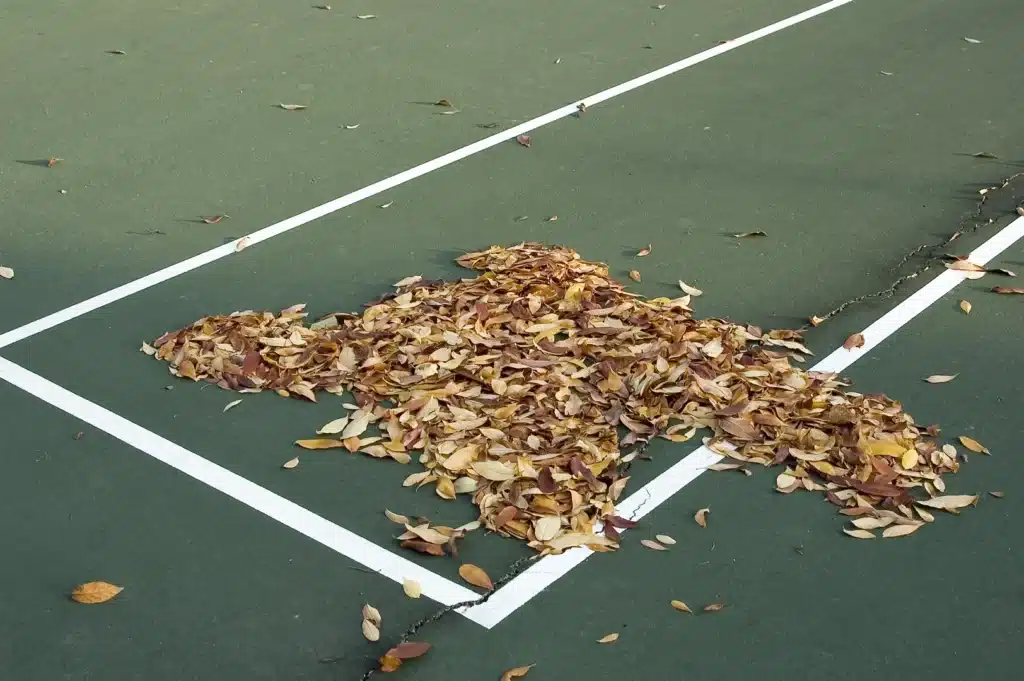
- Organic Debris: Leaves, pine needles, and grass clippings act like a buffet for mold. When they sit on the court and decay, they provide the nutrients mold needs to thrive.
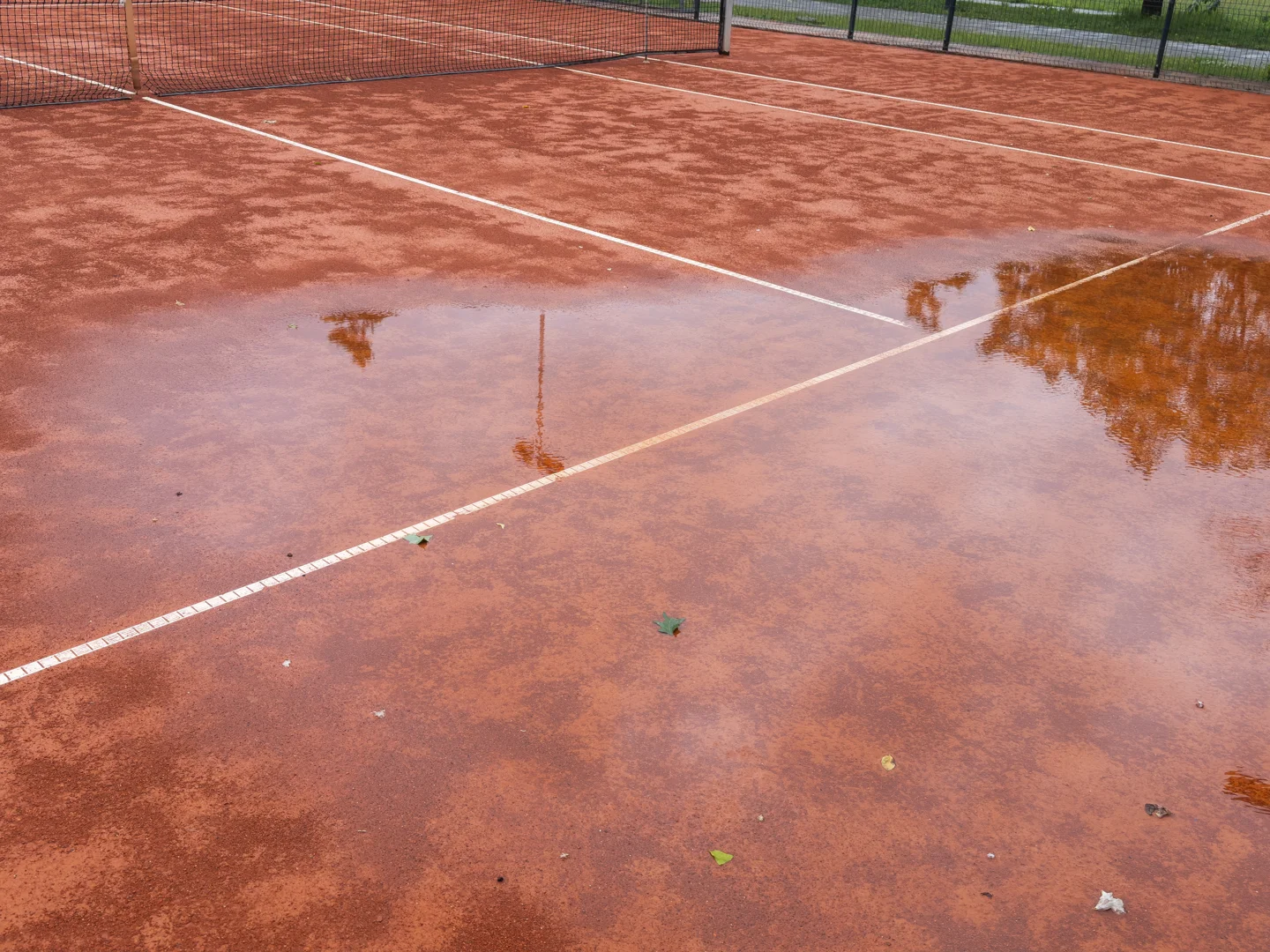
- Standing Water: If your court has “birdbaths” (small depressions where water collects), that stagnant moisture is an open invitation for algae.
- Poor Drainage: Water that doesn’t flow away from the court keeps the edges damp, fostering growth.
- Shade: Overhanging trees or nearby buildings block the sun, preventing the court from drying quickly after a Central Virginia rainstorm.
- Spilled Food and Drinks: Sugary sports drinks or dropped snacks are high-energy fuel for fungus.
Recognizing the Signs
Knowing how to clean mold off tennis courts starts with identifying what you’re looking at:
- Slippery Patches: If a certain area of the court feels like an ice rink even when it looks dry, algae or mold is likely present.
- Dark Staining: Black or dark grey spots that don’t wash away with a simple hose-down are often mold colonies.
- Green Algae: This is usually found in areas with the most moisture and looks like a green film or slime.
- Lichen: This looks like crusty, leaf-like patches that bond tightly to the surface.
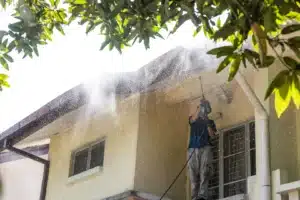
It is important to remember that organic growth isn’t just a court problem. It often spreads from nearby structures. If you notice mold on your court, it might be worth checking your home’s exterior too. We often see mold jump from a shaded roof to a nearby court, which is why residential roof cleaning and commercial building washing are such vital parts of property maintenance.
Step-by-Step Guide: How to Clean Mold Off Tennis Courts
Cleaning your court is a bit like washing a car—you want to be thorough but gentle. Using the wrong chemicals or too much force can cause more damage than the mold itself.
Safety First: Preparation and PPE
Before you start mixing chemicals, protect yourself and your court.
- Gloves and Goggles: Bleach and TSP (Trisodium Phosphate) can irritate your skin and eyes.
- Ventilation: Since you’re outdoors, this usually isn’t an issue, but be mindful of the wind direction when spraying.
- Footwear: Wear non-marking tennis shoes to avoid scuffing the surface while you work.
- Protect the Perimeter: If you have sensitive plants near the court, pre-wet them with clean water so any runoff is diluted.
Selecting the Best Solutions for How to Clean Mold Off Tennis Courts
The right solution depends on the severity of the growth.
| Solution Type | Mixture Ratio | Best For |
|---|---|---|
| Standard Bleach Mix | 2 parts water : 1 part bleach | General mold and mildew removal |
| Gentle Bleach Mix | 4 parts water : 1 part bleach | Light maintenance and sensitive areas |
| The “Heavy Duty” Mix | 4 parts water : 2 parts TSP : 1 part bleach | Stubborn stains and heavy mildew |
| Neutral Cleaner | Per manufacturer instructions | General dirt and light stains (e.g., Simple Green) |
For those looking for how to clean mold off tennis courts using specialized products, brands like SportMaster offer guidance on which detergents are compatible with their acrylic sport surfaces. If you prefer a professional touch to ensure the coating remains intact, our commercial tennis court soft washing services use specialized, low-pressure techniques to kill mold at the root without the risks of DIY scrubbing.
Safe Equipment and Tools for How to Clean Mold Off Tennis Courts
Don’t reach for the industrial-strength pressure washer just yet. To keep your court in top shape for its 20 to 25-year potential lifespan, you need the right tools:
- Soft Nylon Brushes: Avoid wire brushes or stiff-bristled brooms that can strip the sand from the acrylic coating.
- Water Brooms: A Watermiser Waterbroom is a fantastic investment. It uses up to 75% less water than a standard hose and provides a consistent, wide cleaning path.
- Low-Pressure Sprayers: A simple garden sprayer is perfect for applying your bleach solution.
- Soft Wash Systems: For a truly deep clean, professional soft washing is the gold standard, as it uses high-volume, low-pressure water to rinse away mold safely.
The Cleaning Process
- Clear the Surface: Use a leaf blower or soft broom to remove all loose debris like leaves and twigs.
- Apply the Solution: Spray your chosen mixture (we recommend the 2:1 water-to-bleach ratio for most cases) over the moldy areas. Let it sit for 5 to 10 minutes, but don’t let it dry on the surface!
- Gentle Scrubbing: Use your soft nylon brush to agitate the area. You don’t need to lean into it; let the chemicals do the heavy lifting.
- Rinse: Use a hose or water broom to flush the area thoroughly. Always rinse from the high side of the court toward the low side (following the natural slope).
- Inspect: Once dry, check for any remaining spores. Mold is hardy, and you might need a second pass to kill everything.
Surface-Specific Maintenance and Prevention
Not all courts are created equal. While most modern courts in Richmond and Chesterfield are acrylic hard courts, you might be playing on clay or synthetic turf.
Acrylic Hard Courts
These are the most common. They are durable but the “sand” in the coating provides a perfect texture for mold to grip. Regular monthly inspections are key. While a residential coating can last 7 to 10 years, that timeline only holds if you keep it clean!
Clay and Fast-Dry Courts (Har-Tru)
Clay courts are a different beast. Because they retain moisture, they are highly susceptible to moss and algae.
- Brushing: Frequent brushing with a stiff-bristle brush helps disrupt growth before it takes root.
- Chemical Caution: Be very careful with chemicals on clay; always check with a professional to ensure you aren’t ruining the court’s drainage or material composition.
Synthetic Turf and Sand-Filled Courts
These often develop moss around the edges.
- Power Brooms: Use a power broom to agitate the fibers and remove dead moss.
- Infill Maintenance: After cleaning, you may need to top-dress the court with clean sand infill to maintain playability.
Prevention: The Best Offense is a Good Defense
Knowing how to clean mold off tennis courts is great, but preventing it is better.
- Landscaping: Keep shrubs and trees trimmed back. Overhanging branches drop debris and create the shade mold loves.
- Drainage: Ensure your perimeter drains are clear. If water is backing up onto the court, mold is inevitable.
- Court Rules: Post signs! No food, no sugary drinks, and non-marking tennis shoes only. Keeping the court free of organic spills is half the battle.
- Monthly Maintenance: Spend 15 minutes once a month blowing off debris. This prevents the “sandpaper effect” where dirt and leaves grind down your coating.
For homeowners who want to keep their entire property looking sharp, residential soft washing can be scheduled alongside court maintenance to ensure a clean, mold-free environment from the driveway to the baseline.
Frequently Asked Questions about Tennis Court Mold
Can pressure washing damage my tennis court?
Yes, absolutely. High-pressure washing (anything over 70 PSI at the nozzle) can “stripe” the court, literally blasting the color coating right off the asphalt or concrete. This leads to premature wear and can force you into a resurfacing cycle much sooner than the standard 5 to 8 years. We always recommend “soft washing” or using a dedicated surface cleaning machine that distributes pressure evenly.
How often should I clean my tennis court to prevent mold?
We recommend a quick inspection and debris removal once a month. A deep clean with a mild detergent or diluted bleach solution should happen at least once a year—ideally in the spring to clear out winter grime. With a consistent maintenance program, a well-built court can last up to 25 years.
Is bleach safe for acrylic tennis court surfaces?
When diluted properly (at least 4 parts water to 1 part bleach, or 2:1 for tougher spots), bleach is safe and highly effective. It is the best way to kill the spores that cause organic growth. The key is to rinse thoroughly. Leaving bleach residue on the court for extended periods can eventually affect the vibrancy of the color coating.
Conclusion
Mastering how to clean mold off tennis courts is the secret to protecting your investment and ensuring your game isn’t interrupted by slippery patches or unsightly stains. Whether you are managing a private court in Manakin Sabot or a commercial facility in Richmond, regular care is the difference between a surface that lasts 5 years and one that lasts 20.
At Alpha Exterior Solutions, we understand that your tennis court is a major part of your property’s value and your lifestyle. We take pride in serving our neighbors across Central Virginia—from Henrico and Hanover to Powhatan and Goochland—with award-winning reliability and eco-friendly cleaning methods.
If the mold has moved beyond a simple DIY fix, or if you simply want the peace of mind that comes with professional care, we are here to help. Our team specializes in the delicate balance of removing tough mold while protecting sensitive court coatings.
Ready to bring your court back to its grand-slam glory? Contact us today for a free estimate on Alpha Exterior Solutions Commercial Tennis Court Soft Washing and let us handle the hard work so you can get back to your serve!

