


How to Kill Roof Moss for Good
Why Moss on Your Roof Is More Than Just a Cosmetic Problem
Removal of moss from roof tiles is one of the most important — and most overlooked — maintenance tasks a homeowner can do to protect their property.
Here is a quick overview of how to remove moss from roof tiles:
- Assess the roof from the ground — gauge how much moss is present and check for visible damage
- Brush or scrape off loose moss — use a stiff-bristle brush or plastic scraper, working from the ridge downward
- Apply a cleaning solution — use a biocide, oxygen bleach mix, or diluted vinegar, and let it sit for 15–20 minutes
- Rinse gently — use a low-pressure garden hose, rinsing from top to bottom
- Clear the gutters — remove all dislodged moss debris so it does not cause blockages
- Apply a preventative treatment — use a biocide or install zinc/copper strips to slow regrowth
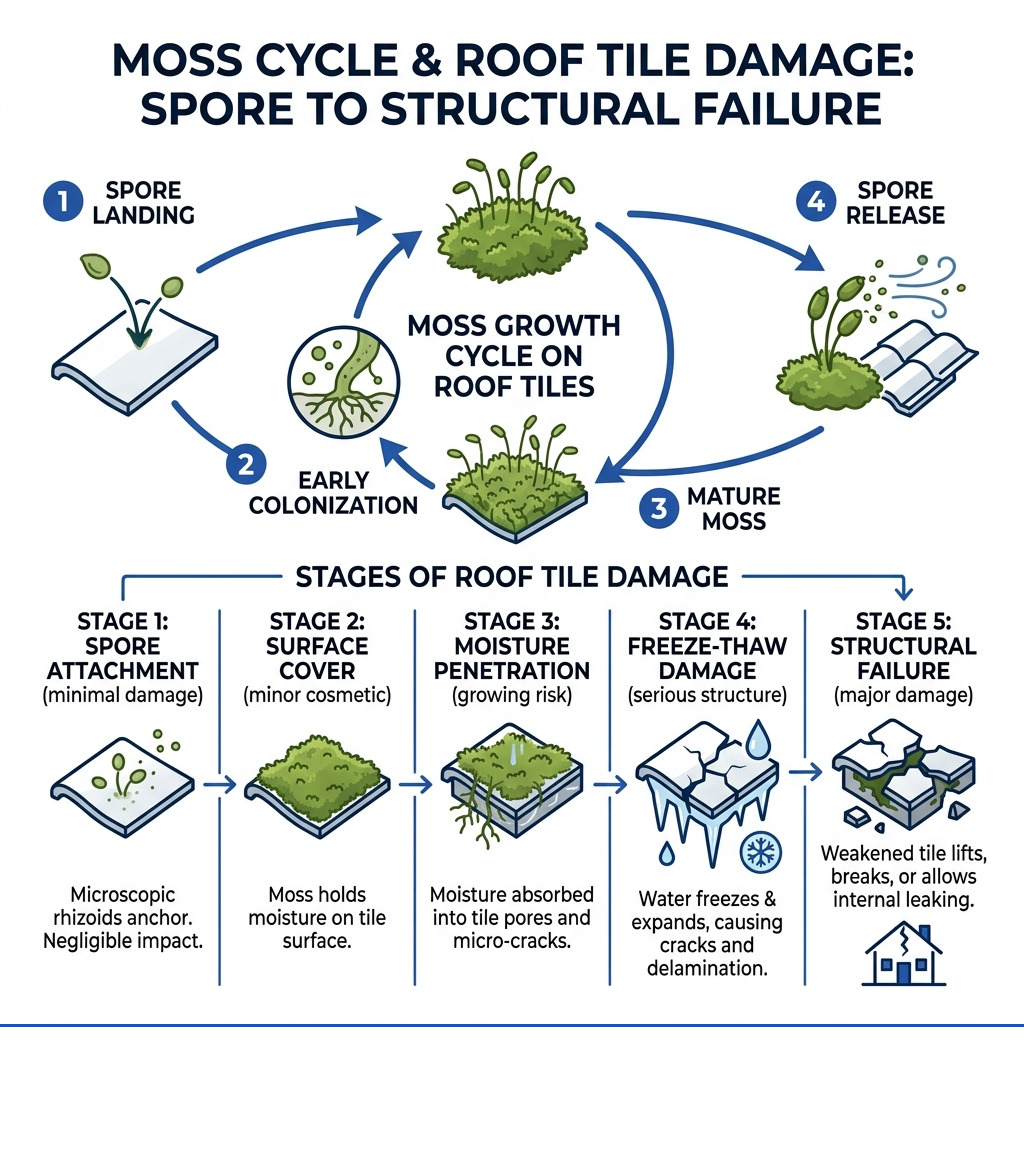
Moss might look harmless — even charming on an older roof. But underneath that soft green layer, something more serious is happening. Moss acts like a sponge, holding moisture directly against your tiles. Over time, that trapped water works its way into cracks, freezes in winter, expands, and slowly breaks your roof apart from the inside.
Left unchecked, moss can lift tiles, block gutters, and even allow water to seep into your attic — turning a simple maintenance job into a costly repair.
And in a climate like Richmond’s, where humidity and tree cover are both high, moss spreads faster than most homeowners expect.
I’m James Kastelein, owner of Alpha Exterior Solutions, and over the years I’ve seen how much damage unchecked moss growth can cause on Richmond-area roofs — making the removal of moss from roof tiles one of the most common and impactful services we provide. In this guide, I’ll walk you through everything you need to know to handle it safely and effectively.
Why the Removal of Moss From Roof Tiles is Critical for Your Home
When we talk to homeowners in Chesterfield or Glen Allen, many assume moss is just a “look” that comes with living in a wooded neighborhood. However, by April 2026, many older roofs in Central Virginia are showing the wear and tear of neglected organic growth. Moss isn’t just sitting on your roof; it’s actively working against it.
The primary danger is moisture retention. Moss can hold up to 20–30 times its own weight in water. Imagine a heavy, soaking wet sponge sitting on your roof for months at a time. This constant dampness prevents the tiles from drying out, which is exactly what they are designed to do.
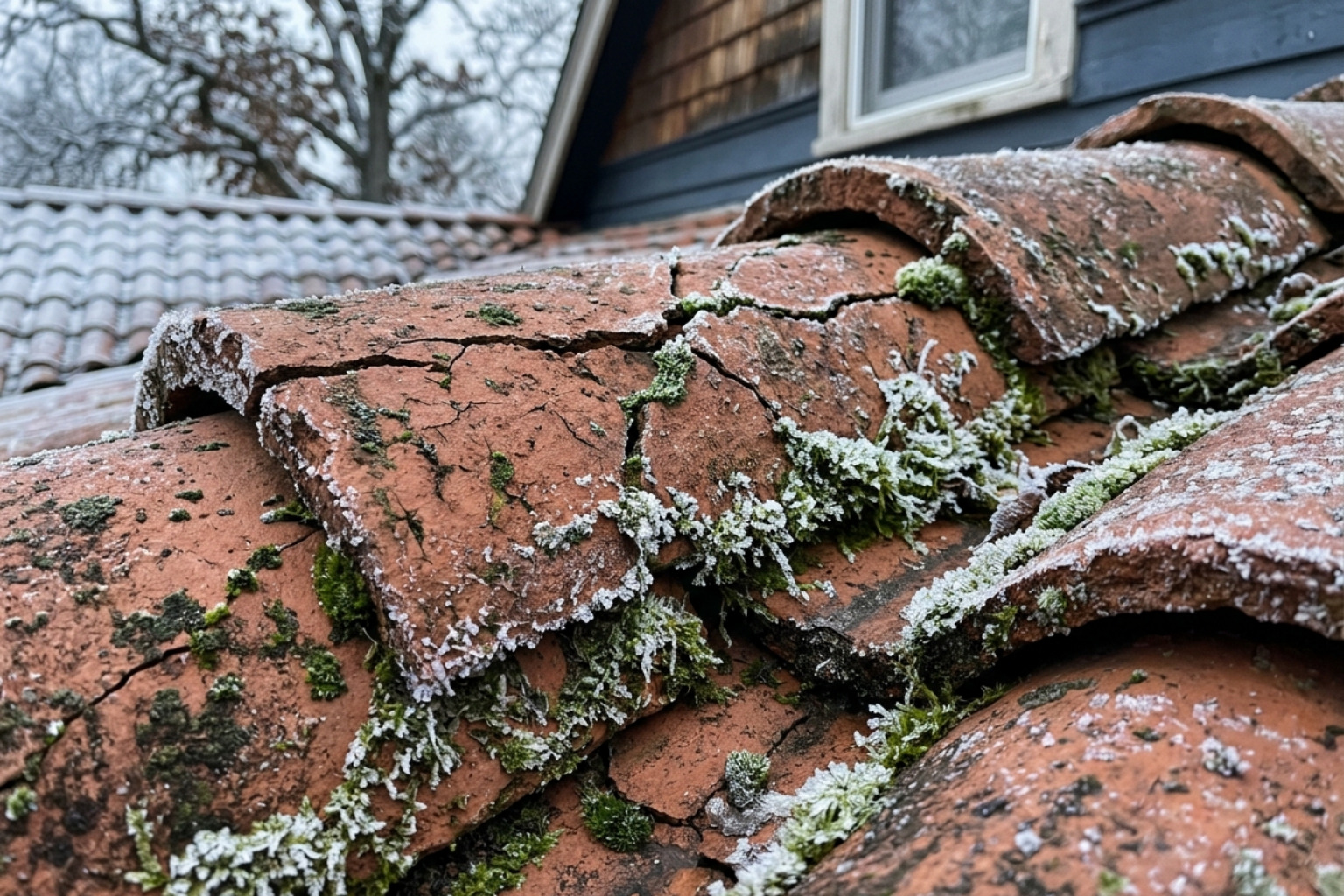
As we move through the seasons in Virginia, we hit the freeze-thaw cycle. Water trapped inside the moss or forced into tiny tile pores freezes and expands. This expansion is powerful enough to crack concrete and clay tiles, leading to “spalling” where the surface of the tile literally flakes off. Furthermore, as moss grows, it wedges itself under the edges of shingles and tiles, lifting them up. This creates a “lip” that catches wind and driving rain, leading to shingle blow-offs and leaks during our summer thunderstorms.
Beyond the physical movement, moss is biologically active. As it decomposes, it releases organic acids that can erode the protective granules on asphalt shingles and the finish on clay tiles. This Residential Roof Cleaning process isn’t just about aesthetics; it’s about stopping a slow-motion demolition of your home’s first line of defense.
How Moss Damages the Overall Roofing System
The damage rarely stops at the surface. When moss clumps break loose—which they eventually do—they roll down into your gutters. This creates thick, heavy blockages that prevent rainwater from draining. In places like Midlothian or Mechanicsville, where we get heavy downpours, clogged gutters lead to water backing up under the roof eaves, rotting the wooden fascia boards and the underlying battens.
Once the battens or the breathable membrane underneath the tiles begin to rot, you’re looking at a structural failure. Damp, rotting wood is also an open invitation for pests. Insects, birds, and rodents are attracted to the soft, moist environment moss creates. If moisture penetrates the decking, it enters the attic, leading to mold growth that can affect your family’s respiratory health and cause interior ceiling stains.
The Role of Shade and Environment in Growth
Moss is a master of survival, but it has specific preferences. It thrives in damp, shaded, and cool areas. This is why you’ll almost always see the heaviest growth on the north-facing slopes of roofs in Richmond and Powhatan. These areas receive the least direct sunlight, meaning they stay damp much longer after a rainstorm.
Environment plays a huge role. Overhanging tree branches are the most common culprits. They provide the shade moss loves and drop leaves and debris that trap even more moisture. Trees also act as a “highway” for moss spores, which are easily carried by the wind or dropped by birds. If your home is in a high-humidity area with poor airflow—common in our lush Virginia summers—your roof becomes a perfect laboratory for moss, algae, and lichen.
Safe and Effective Methods for Roof Cleaning
When it comes to the removal of moss from roof tiles, there are two main schools of thought: physical removal and chemical treatment. At Alpha Exterior Solutions, we often find that a combination is most effective for heavy infestations.
| Method | Best For | Pros | Cons |
|---|---|---|---|
| Manual Scraping | Heavy, thick moss clumps | Immediate results; no chemicals | Labor intensive; risk of tile damage if too aggressive |
| Soft Washing | Algae, lichen, and thin moss | Kills spores at the root; very safe for tiles | Takes time for moss to “weather” off naturally |
| Pressure Washing | NEVER RECOMMENDED | Fast | Destroys tiles; voids warranties; causes leaks |
Safety is the absolute priority. Roofs are slippery, especially when covered in wet moss. We always use professional-grade safety harnesses and non-slip footwear. If you are attempting a DIY clean, ensure your ladder is stabilized on a flat, dry surface and never work alone. Always work from the ridge (the top) downward to ensure you aren’t pushing water or debris up under the tiles. For a deeper look at safe techniques, check out our Residential Soft Washing guide.
Manual Scraping and Brushing for Removal of Moss From Roof Tiles
For thick carpets of moss, manual removal is often the first step. We follow the “80% rule”—the goal is to remove the bulk of the growth without being so aggressive that you damage the tile surface.
- Tools: Use a stiff-bristle nylon brush or a plastic scraper. Never use metal tools, as they will scratch and gouge the tiles.
- Protection: Lay down tarpaulins around the perimeter of the house to catch the falling moss. This makes cleanup much easier and prevents moss spores from seeding in your lawn.
- Technique: Gently agitate the moss clumps. If the moss is dry (common in mid-summer), it will often pop right off. Work in small sections, moving from the top of the roof toward the gutters.
- Gutter Care: Before you start, block your downpipes with rags or mesh. This prevents the heavy moss debris from entering your underground drainage system or “soakaways,” which can be incredibly expensive to clear.
Chemical and Natural Solutions for Removal of Moss From Roof Tiles
Once the heavy clumps are gone, you need to kill the remaining spores to prevent immediate regrowth.
Commercial Biocides: These are often the best choice for long-term results. Products containing alkyl dimethyl ammonium chloride are effective at killing organic growth without the harshness of high-concentration bleach. These solutions are “spray and leave,” meaning they continue to work over several months as rain washes away the dead remains.
Sodium Hypochlorite (Bleach): While effective, it must be used with extreme caution. A common mix is 1 part bleach to 4 parts water. However, bleach can be hard on surrounding landscaping and can dry out certain roofing materials if not rinsed properly.
Natural DIY Options:
- Vinegar: A mixture of 1 part white vinegar to 2 parts water can kill moss, though it may take multiple applications.
- Baking Soda: Sprinkling baking soda on damp moss can change the pH level to a point where the moss cannot survive.
- Oxygen Bleach: This is a more eco-friendly alternative to standard bleach. It’s safer for plants but still effective at breaking down the cellular structure of moss.
For more information on how we balance effectiveness with safety, read our Low Pressure Power Washing Guide.
What to Avoid When Cleaning Your Roof
Knowing what not to do is just as important as knowing the right steps. The most common mistake we see in Henrico and Chesterfield is the use of high-pressure power washers.
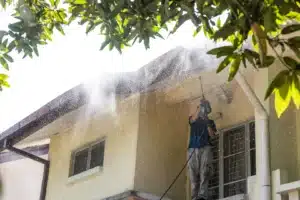
High-Pressure Washing: You should never use a high-pressure setting on roof tiles. The force of the water can strip the protective granular coating off shingles, blast holes in older clay tiles, and—most dangerously—force water upward under the tiles. This can saturate your insulation and cause immediate leaks.
Walking on Tiles: If you have clay or slate tiles, walking on them is a recipe for disaster. They are fragile and can crack under the weight of a person. Professionals use specialized ladders or “cherry picker” lifts to reach these areas without putting weight on the tiles.
Harsh Chemicals: Never mix ammonia and bleach; this creates toxic chloramine gas. Also, avoid highly acidic cleaners that can react with the calcium carbonate often found in concrete tiles, leading to structural weakening. For more on why low pressure is king, see our page on Residential Pressure Washing.
Long-Term Prevention and Maintenance Strategies
Once your roof is clean, you want to keep it that way. Prevention is much cheaper than removal.
Metal Strips: Installing zinc or copper strips along the ridge of the roof is a classic, effective preventative. When it rains, water reacts with the metal, releasing ions that are toxic to moss and algae. As this “metallic water” washes down the roof, it creates an environment where moss simply cannot grow. Zinc is generally more cost-effective, while copper is often considered more potent.
Tree Trimming: This is perhaps the most effective “natural” prevention. By trimming back overhanging branches, you increase the amount of sunlight hitting the roof and improve airflow. This helps the roof dry out faster after rain, removing the moisture moss needs to survive.
Regular Inspections: We recommend a quick ground-level check every spring and fall. Look for small green tufts starting to form in the “valleys” of your roof or around chimneys. Catching moss when it’s the size of a dime is much easier than waiting until it’s a thick carpet.
Biocide Re-application: A professional biocide treatment every 2 to 5 years can keep your roof in a “maintenance phase” indefinitely, preventing the need for heavy scraping ever again.
Frequently Asked Questions About Roof Moss
What is the best time of year to remove moss?
The best time for removal of moss from roof tiles is during the late spring or mid-summer. During dry spells, moss becomes brittle and dormant, making it much easier to scrape away without it smearing or sticking to the tiles. However, applying liquid treatments is often best on a cool, cloudy day to prevent the solution from evaporating too quickly, allowing it to soak into the moss roots.
Can moss growth be prevented naturally?
Yes! The most “natural” way to prevent moss is to change the environment. By increasing sunlight and airflow through tree pruning and keeping the roof clear of debris like leaves and twigs, you remove the conditions moss needs. Vinegar applications are also a natural way to spot-treat small areas before they spread.
When should I hire a professional for moss removal?
You should call a professional if:
- Your roof has a steep pitch that makes walking dangerous.
- You have fragile clay or slate tiles that require specialized access equipment.
- The moss infestation is extensive and covers more than 25% of the roof.
- You want to ensure your roof warranty remains valid (many manufacturers require professional cleaning).
- You simply don’t have the safety gear (harnesses, roof ladders) to do the job safely.
Conclusion
At Alpha Exterior Solutions, we believe that a clean roof is a healthy roof. Serving the Greater Richmond area—from the historic homes in Bon Air to the newer developments in Short Pump and Moseley—we’ve dedicated ourselves to providing award-winning reliability and eco-friendly methods.
The removal of moss from roof tiles isn’t just a weekend chore; it’s a vital investment in your home’s longevity. By following the steps in this guide, you can protect your structural integrity, boost your curb appeal, and avoid the “sticker shock” of a premature roof replacement.
If you’re unsure about the condition of your roof or simply want the peace of mind that comes with a professional touch, our team is ready to help. We offer free assessments and use soft-wash systems designed to kill moss at the source without damaging your tiles.
Protect your home with professional roof cleaning today and give your roof the care it deserves. Whether you are in Goochland, Ashland, or right here in Richmond, we are your partners in property maintenance.

