


The Dirty Truth About Cleaning Your Deck Before You Stain
Why You Can’t Skip Cleaning Your Deck Before Staining
Cleaning deck prior to staining is the single most important step for a finish that actually lasts.
Here’s a quick overview of how to do it right:
- Inspect and repair – Check for rot, loose fasteners, and damaged boards
- Clear the deck – Remove all furniture, plants, and debris
- Apply deck cleaner – Use an oxygenated cleaner; let it dwell 15 minutes
- Scrub and rinse – Scrub with a stiff synthetic brush, rinse thoroughly
- Apply wood brightener – Restores pH and opens wood pores
- Dry completely – Wait 24-48 hours; wood moisture must be 15% or below
- Sand if needed – Light sanding removes mill glaze and smooths weathered grain
- Stain – Apply in dry conditions, 50-80°F
Your deck takes a beating every year. Sun, rain, humidity, and foot traffic leave behind dirt, mold, mildew, and gray wood fibers that go deep into the grain.
If you stain over all of that? The stain won’t stick. It won’t penetrate the wood properly, and it will peel, fade, or look blotchy within a season or two.
As one industry guide puts it: lack of preparation is the most common reason deck stains and sealers fail.
The good news is that cleaning a deck the right way isn’t complicated. But it does take the right steps, in the right order. This guide walks you through everything – from testing your old finish to knowing exactly when the wood is dry enough to stain.

Why Cleaning Your Deck Prior to Staining is Non-Negotiable
We have seen it a thousand times across Greater Richmond: a homeowner spends a small fortune on high-quality stain, only to have it peel off in sheets six months later. The culprit? Skipping the deep clean. When you are cleaning deck prior to staining, you aren’t just washing away visible dirt; you are chemically and mechanically preparing the wood to receive a new life.
Wood is a porous material. Over time, those pores get clogged with microscopic mold spores, mildew, and “gray” wood fibers—dead cells killed by UV rays. If you don’t remove these, the stain sits on top of the debris rather than soaking into the wood. This leads to adhesion failure. Furthermore, cleaning helps manage “tannin bleeding,” those dark streaks that often appear on cedar or redwood.
Proper Residential Soft Washing techniques ensure that the wood is sterilized and the pores are open. Without this, the wood remains “sealed” by old grime, and your expensive stain will simply slide off the surface.

Identifying Your Current Finish: The Oil vs. Water Test
Before we grab the scrub brush, we need to know what we’re fighting. Is your old stain oil-based or water-based? This dictates whether you need a simple cleaner or a heavy-duty stripper.
To find out, perform a solvent test. Take a small amount of deck stripper or even a bit of nail polish remover (acetone) and apply it to an inconspicuous spot. Let it sit for 15 minutes. If the finish softens and wipes away easily, it’s likely a water-based coating that needs to be fully stripped. If it doesn’t budge, it’s likely an oil-based finish. You can also try the absorption test: sprinkle water on a clean, dry patch of the deck. If it beads up, there is still an active sealer present that must be removed before you can restain. For more details on this process, check out this guide on How to Prep a Deck for Stain | Sherwin-Williams.
Essential Tools and Materials for Deck Preparation
To get professional results, you need professional tools. Don’t rely on a simple garden hose and a prayer. Here is what we recommend having on hand:
- Oxygen Bleach (Sodium Percarbonate): Unlike harsh chlorine bleach, this is eco-friendly and won’t kill your prized hydrangeas. It’s excellent for removing mold and mildew.
- Commercial Cleaners: Products like Olympic Premium Deck Cleaner are formulated to break down tough grime without damaging wood fibers.
- Pump Sprayer: This is the most efficient way to apply cleaners evenly.
- Stiff Synthetic Bristle Brush: Never use wire brushes! They can tear the wood and leave behind metal fragments that rust.
- Safety Gear: Goggles and chemical-resistant gloves are a must. Even “eco-friendly” cleaners can irritate your skin and eyes.
Choosing the Best Cleaning Deck Prior to Staining Solutions
There are four main types of chemicals used in deck prep:
- Sodium Hypochlorite: This is standard bleach. It’s great for killing mildew but can “fuzz” the wood if left on too long.
- Sodium Percarbonate: The “Oxy” cleaner. It’s safer for the environment and very effective at lifting dirt.
- Oxalic Acid: Used primarily as a brightener to remove iron stains and tannins.
- Sodium Hydroxide: A potent stripper used to remove old, stubborn finishes.
For most decks in Central Virginia, an oxygenated cleaner like Gemini Restore-A-Deck is the gold standard. It’s safer for your family and your lawn while still being tough on grime.
Specialized Equipment for Different Wood Types
Different woods require different touches.
- Pressure-Treated Wood: Common in Richmond, this wood is hardy but can be easily gouged by high pressure.
- Cedar and Redwood: These are softwoods. They contain natural tannins that turn black when exposed to alkaline cleaners, so a brightener is mandatory here.
- Composite Decking: While it doesn’t need stain, it still needs cleaning! You can use higher PSI (up to 3,100) on composites to clear out the plastic-and-wood-fiber pores.
If you have stone or pavers nearby, you might also consider Residential Paver Sealing to keep your entire outdoor living space looking sharp.
Step-by-Step Guide to Cleaning Deck Prior to Staining
Now, let’s get to work. Cleaning deck prior to staining is a process that rewards patience.
1. Inspection and Repair
Before you get the wood wet, walk the boards. Are there loose nails? Replace them with outdoor-rated screws that are slightly longer than the original nails. Look for rot by poking suspicious-looking spots with a screwdriver; if it sinks in like butter, that board needs to go. Check the ledger board (where the deck meets the house) for structural integrity.
2. Clear and Sweep
Remove everything. Furniture, grills, and planters need to be gone. Use a broom rated for rough surfaces to get the big chunks of debris off. Use a putty knife or a specialized hook tool to clear out the gaps between the boards—airflow is crucial for a dry deck!
3. Protecting the Perimeter
Even with eco-friendly cleaners, it’s a good idea to heavily water down your grass and plants before you start. This dilutes any runoff. You can also cover sensitive plants with plastic sheeting, but don’t leave it on too long in the Virginia heat, or you’ll bake them!
4. Application and Agitation
Fill your pump sprayer with your chosen cleaner. Work in small sections (about 50 square feet at a time) so the cleaner doesn’t dry out.
- Dwell Time: Let the cleaner sit for about 15 minutes.
- Misting: If it starts to dry, lightly mist it with a garden hose.
- Scrubbing: Use your synthetic brush to scrub with the grain. This dislodges the “mill glaze” (a waxy buildup on new wood) and lifts deep-seated dirt.
5. Rinsing and Drying
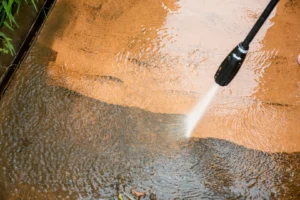
Rinse the deck thoroughly. You can use a garden hose with a high-pressure nozzle or a pressure washer on a very low setting. The goal is to remove all chemical residue.
Now comes the hardest part: waiting. The deck must dry for at least 24 to 48 hours. In humid areas like Henrico or Hanover, it might take longer. The wood moisture content should be 15% or less. If you don’t have a moisture meter, use the “water drop test”—if a drop of water soaks in instantly, the wood is dry and thirsty for stain. For more on timing, see The TWP Stain Guide to Prepping a Deck in 2025.
Advanced Techniques: Brightening and Pressure Washing
If you want your deck to look like it belongs in a magazine, you need to use a wood brightener.
When to Use a Wood Brightener
Think of cleaners as “Step A” and brighteners as “Step B.” Most deck cleaners are alkaline (high pH). This can make wood look dark and “tired.” A brightener (usually citric or oxalic acid) lowers the pH, neutralizing the cleaner and “waking up” the wood’s natural color. It also opens the wood’s pores even further, ensuring the stain can dive deep into the fibers. Apply the brightener while the wood is still wet from the cleaning phase, let it sit for a few minutes, and then rinse it off.
Safe Pressure Washing PSI for Wood
We often get asked, “Can I use a pressure washer?” The answer is yes, but be careful!
- PSI Settings: For softwoods like cedar or pine, stay between 1,200 and 1,400 PSI.
- The Fan Tip: Use a 40 or 45-degree fan tip. Never use a “zero-degree” red tip, as it will carve your name into the wood like a laser.
- Distance: Keep the wand 8 to 12 inches away from the surface.
- Motion: Always keep the wand moving in long, sweeping strokes with the grain of the wood.
If this sounds intimidating, our Residential Pressure Washing experts are always here to help you get that perfect, damage-free finish.
Common Mistakes and Pro Tips for a Flawless Finish
Even the best DIYers can fall into these traps:
- Over-Sanding: While a light sand with 60-80 grit paper is great for smoothing out “fuzz,” over-sanding with high grits (like 120+) can actually seal the wood pores shut, preventing stain absorption.
- Using Chlorine Bleach Only: Bleach kills mildew, but it doesn’t remove dirt or broken-down wood fibers. It can also leave the wood looking “washed out” and brittle.
- Staining in Direct Sun: If the wood is too hot, the stain will dry on the surface before it can soak in. This leads to peeling. Aim for an overcast day or work in the shade.
- Ignoring the Forecast: You need a solid 48-hour window of dry weather after staining. Check the Richmond forecast twice!
Frequently Asked Questions about Cleaning Deck Prior to Staining
How long should the deck dry after cleaning before I apply stain?
The standard rule is 48 hours of dry weather. However, if it’s very humid or you used a high-pressure washer (which forces water deeper into the wood), you may need 72 hours. The wood must be below 15% moisture content.
Can I use a homemade cleaner like vinegar or dish soap?
You can, but it might not be enough for a heavily weathered deck. A mixture of 1 gallon warm water, 2 tablespoons of ammonia-free dish soap, and 1 quart of oxygen bleach is a decent DIY recipe for light cleaning. Avoid vinegar if you plan on using an oil-based stain immediately after, as the acidity can interfere with some formulas.
What is the best weather for cleaning and prepping a deck?
Look for temperatures between 50°F and 80°F. High humidity slows down drying times, so a clear, breezy day is your best friend. Late spring and early fall are the “Goldilocks” seasons for deck work in Central Virginia.
Conclusion
Cleaning deck prior to staining is a labor of love, but the results speak for themselves. A well-prepped deck doesn’t just look better; it stays protected against the harsh Virginia elements for years longer than a “slap-dash” job.
At Alpha Exterior Solutions, we take pride in our award-winning reliability and eco-friendly methods. Whether you need a deep clean, a structural refresh, or a professional stain application, we serve homeowners from Short Pump to White Stone with the same dedication to quality.
Don’t spend your entire summer scrubbing on your hands and knees. Get a free estimate for professional deck and fence staining today and let us handle the “dirty truth” while you enjoy the sunshine!